
Bishop · Theologian
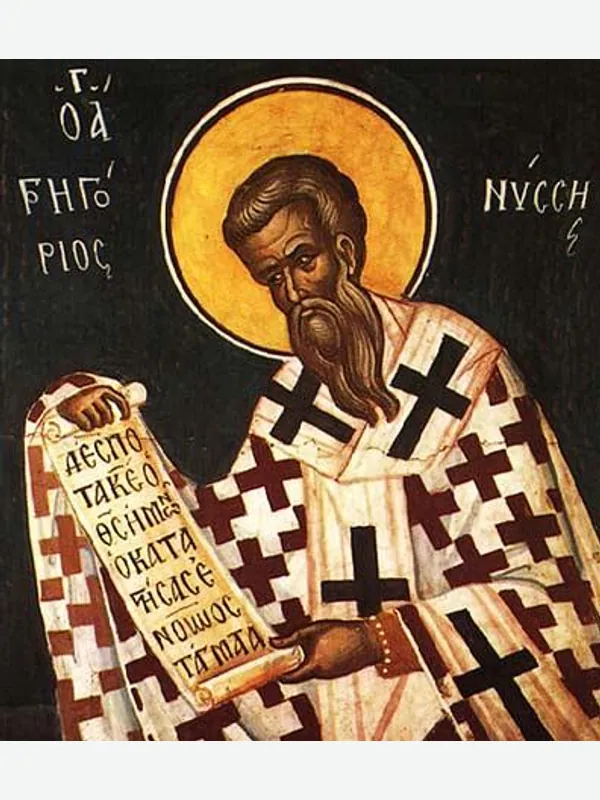
Gregory of Nyssa
- Born
- c. 335Cappadocia
- Died
- c. 395
Gregory of Nyssa was a fourth-century Cappadocian bishop, biblical interpreter, and theologian. The younger brother of Basil of Caesarea and Macrina, he became bishop of Nyssa in 372, suffered deposition during anti-Nicene opposition, and returned after the death of Valens. His writings unite scriptural interpretation with philosophical argument on God, human nature, resurrection, and spiritual transformation.
Start here
 The Great CatechismGregory of NyssaThe Great Catechismc. 380
- OMOn the Making of ManGregory of NyssaNicene & Post-NiceneOn the Making of Manc. 380
- OGOn "Not Three Gods"Gregory of NyssaNicene & Post-NiceneOn "Not Three Gods"c. 380
- OROn the Soul and the ResurrectionGregory of NyssaNicene & Post-NiceneOn the Soul and the Resurrectionc. 380
Biography
Cappadocian bishop and theologian who developed pro-Nicene doctrine through works on the Trinity, creation, human nature, salvation, and the soul's continuing growth toward God.
Family and formation
Gregory was born around 335 into the same Cappadocian Christian family as Basil of Caesarea and Macrina. Evidence for his formal education is limited, and accounts that make Basil his teacher remain probable rather than certain. Gregory became thoroughly conversant with Greek rhetoric and philosophy. He served for a time as a reader in the church and also worked in a secular rhetorical career. His writings present Macrina as a teacher of Christian wisdom, most fully in the Life of Macrina and On the Soul and the Resurrection. These texts are literary portraits as well as sources for the family's ascetic setting. [1][2]
Bishop, deposition, and return
Basil appointed Gregory bishop of the small Cappadocian see of Nyssa in 372. Basil wanted reliable allies in a province divided by imperial reorganization and theological conflict. Gregory was not an effective administrator by his brother's standards. Opponents charged him with financial misconduct, and a hostile synod deposed him in 376 while Emperor Valens supported anti-Nicene bishops. After Valens died in 378, Gregory returned to his see. Basil and Macrina both died around 379, losses that marked a turn toward the most productive period of Gregory's theological writing. [1][2]
Doctrinal work and councils
Gregory continued Basil's controversy with Eunomius, challenging the claim that the word unbegotten defines God's essence and entails the Son's created status. He participated in the Council of Constantinople in 381 and was later entrusted with ecclesiastical missions. Treatises such as On Not Three Gods and the Great Catechism address the language of divine unity, the incarnation, sacraments, resurrection, and restoration. His theological method combines close engagement with Scripture, concepts drawn from Greek philosophy, and a persistent warning that God's inner nature exceeds human comprehension. [1][2][3]
Biblical interpretation and later life
Gregory wrote homilies and commentaries on creation, Moses, the Psalms, Ecclesiastes, the Song of Songs, the Beatitudes, and the Lord's Prayer. He often read biblical narratives as patterns of moral purification and growth in the knowledge of God. In the Life of Moses, progress has no final resting point because the infinite God can never be exhausted by a finite creature. Gregory appears in records into the mid-390s and then disappears from view. The date and circumstances of his death are unknown. Later Byzantine theology received him deeply, while his influence in the Latin West was more limited by translation and transmission. [1]
Works and bibliography
47 works in TrinityLibrary
Against Eunomius — Book 1
Gregory of Nyssa discusses creation, the Holy Spirit, and truth in Against Eunomius, Book 1. The opening subject is “§2. we have been justly provoked to make this answer, being stung by eunamius' accusations of our brother.”Against Eunomius — Book 10
Gregory of Nyssa discusses eternal life, faith, and knowledge in Against Eunomius, Book 10.Against Eunomius — Book 11
Gregory of Nyssa discusses creation, baptism, and truth in Against Eunomius, Book 11.Against Eunomius — Book 12
Gregory of Nyssa discusses the incarnation, divine grace, and truth in Against Eunomius, Book 12. The opening subject is “§1. this twelfth book gives a notable interpretation of the words of the lord to Mary, "touch me not, for i am not yet ascended to my father.”Against Eunomius — Book 2
Gregory of Nyssa discusses the Holy Spirit, creation, and the soul in Against Eunomius, Book 2. The opening subject is “§2. gregory then makes an explanation at length touching the eternal father, the son, and the Holy spirit.”Against Eunomius — Book 3
Gregory of Nyssa discusses creation, truth, and knowledge in Against Eunomius, Book 3. The opening subject is “§2. he then once more excellently, approximately, and clearly examines and expounds the passage, "the lord created me.”Against Eunomius — Book 4
Gregory of Nyssa discusses creation, idolatry, and truth in Against Eunomius, Book 4. The opening subject is “§3. he then again admirably discussed the term prwtotokoz as it is four times employed apostle.”Against Eunomius — Book 5
Gregory of Nyssa discusses creation, the incarnation, and suffering in Against Eunomius, Book 5.Against Eunomius — Book 6
Gregory of Nyssa discusses suffering, sin, and creation in Against Eunomius, Book 6.Against Eunomius — Book 7
Gregory of Nyssa discusses creation, the Holy Spirit, and truth in Against Eunomius, Book 7.Other historically significant writings
- Against Eunomiusafter 379 · Greek · Doctrinal controversy · accepted
- Lettersfourth century · Greek · Correspondence · accepted
- Life of Macrinalate fourth century · Greek · Christian biography · accepted
- Life of Moseslate fourth century · Greek · Biblical and spiritual interpretation · accepted
Not yet available as a complete TrinityLibrary collection.
Theology & thought
Divine unity and three hypostases
Gregory argues that Father, Son, and Holy Spirit share one divine nature and operation. Their distinction is real, but counting three hypostases does not yield three independent gods because the divine work is inseparable.
Primary texts:Against EunomiusOn "Not Three Gods"
The incomprehensible God
Gregory rejects Eunomius's confidence that a definition can contain God's essence. Creation and divine action give real knowledge of God, yet the divine nature remains beyond comprehension, so theological knowledge advances through reverent inquiry rather than possession.
Primary texts:Against Eunomius
The divine image and salvation
Human beings bear the divine image in rational freedom and are made for participation in divine life. The incarnation, death, and resurrection of Christ heal corrupted human nature and open the way from mortality toward incorruption.
Primary texts:On the Making of ManThe Great Catechism
Unending growth toward God
Gregory describes the faithful life as continuing movement into the inexhaustible goodness of God. Perfection is not static completion but a desire continually enlarged through virtue, prayer, and contemplation.
Primary texts:Life of MosesHomilies on the Song of Songs
Historical timeline
Approximate and disputed dates are marked rather than silently normalized.
- life
Born in Cappadocia
Born into the family of Basil, Macrina, and several other prominent fourth-century Christians. [1]
- office
Bishop of Nyssa
Appointed to the see by his brother Basil during a period of ecclesiastical conflict. [1]
- controversy
Deposed and exiled
Removed by opponents during the reign of Valens after charges concerning church funds. [1]
- office
Returns to Nyssa
Restored to his see after the death of Valens changed imperial religious policy. [1]
- council
Council of Constantinople
Participated in the council that consolidated pro-Nicene teaching in the eastern empire. [1]
- life
Last known period
The record falls silent in the mid-390s; the place and exact date of death are unknown. [1]
Relationships & influence
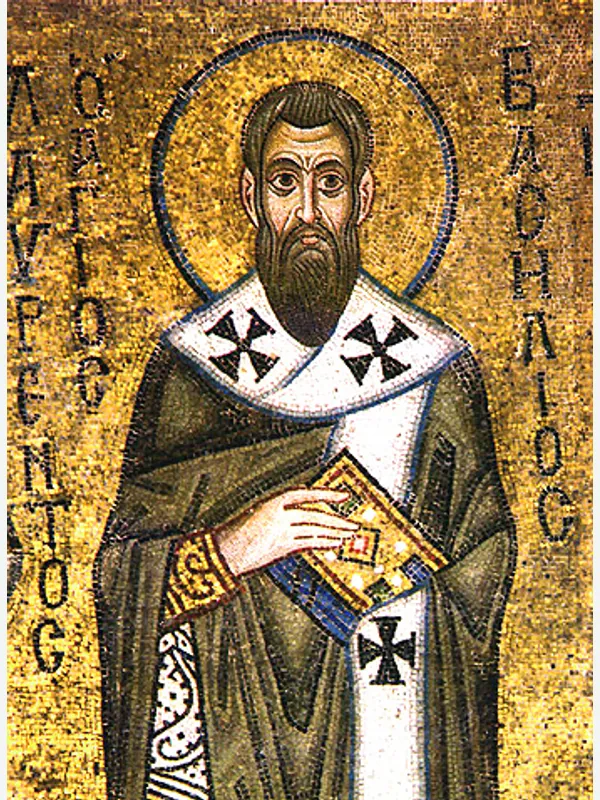
Basil was Gregory's older brother, appointed him to Nyssa, and provided theological arguments that Gregory later developed in greater detail.
Documented personal relationshipGregory portrayed his sister Macrina as a spiritual and intellectual teacher in the Life of Macrina and On the Soul and the Resurrection.
Documented personal relationship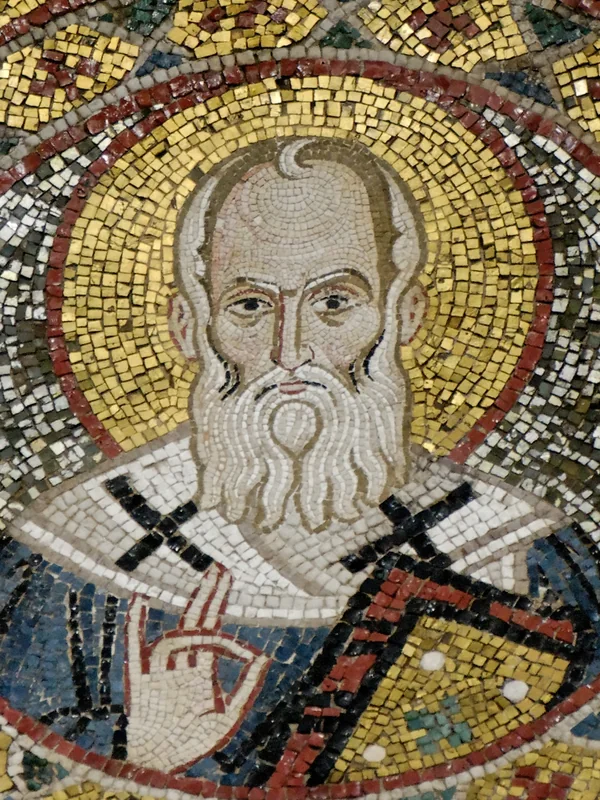
Both belonged to the Cappadocian pro-Nicene movement and worked within the ecclesiastical world shaped by the council of 381.
Documented personal relationshipGregory's major doctrinal controversy answered Eunomius's writings; literary opposition does not establish a personal encounter.
Later or textual influence — no personal contact impliedGregory received and reworked themes from Origen in exegesis, spiritual progress, and eschatology more than a century after Origen's death.
Later or textual influence — no personal contact impliedReception and debated interpretation
Byzantine theologians drew on Gregory's Trinitarian language, exegesis, and account of spiritual ascent. Much of his work reached the medieval Latin West unevenly, though translations such as On the Making of Man circulated. Modern study has renewed interest in his philosophical theology, opposition to slavery, and statements about universal restoration. Scholars continue to debate how those eschatological passages fit together and should not turn them into a settled modern system. [1][2]
Sources & further reading
Reader-facing prose and editorial evidence are kept distinct. Source status reflects link and identity checks, not endorsement of every claim in a source.
- referenceGregory of Nyssaverified
Internet Encyclopedia of Philosophy
- scholarshipBasil of Caesarea, Gregory of Nyssa, and the Transformation of Divine Simplicityverified
Andrew Radde-Gallwitz · Oxford University Press · 2009
- referenceHistory of Trinitarian Doctrines: Gregory of Nyssaverified
Stanford Encyclopedia of Philosophy
- primaryAgainst Eunomiusverified
Gregory of Nyssa
- primaryLife of Macrinaverified
Gregory of Nyssa