
Bishop · Theologian
Gregory of Nazianzus
- Born
- c. 329Near Nazianzus, Cappadocia
- Died
- c. 390Arianzus, Cappadocia
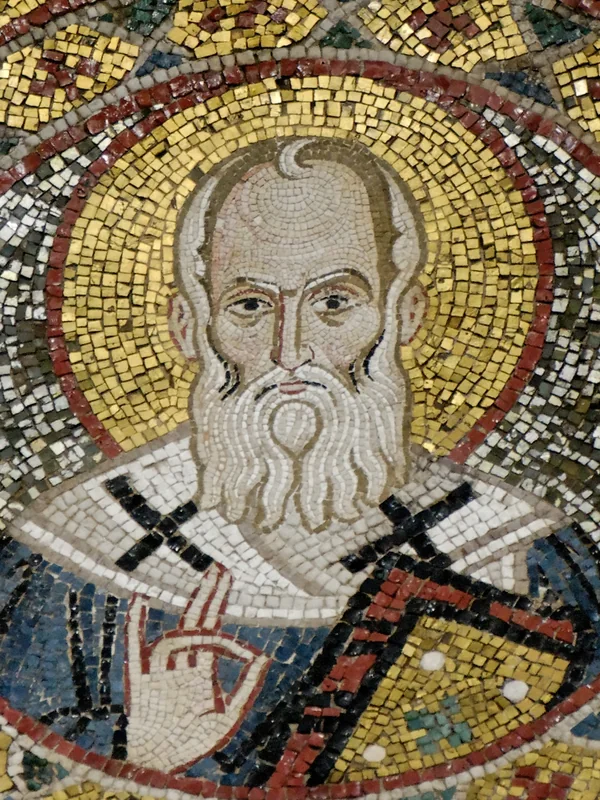
Gregory of Nazianzus was a Cappadocian bishop, preacher, poet, and theologian. Educated alongside Basil of Caesarea at Athens, he spent much of his life divided between contemplative retirement and offices he accepted reluctantly. His preaching at Constantinople in 379–381 helped restore a pro-Nicene community in the imperial capital, while his Theological Orations became enduring statements of Trinitarian doctrine.
Start here
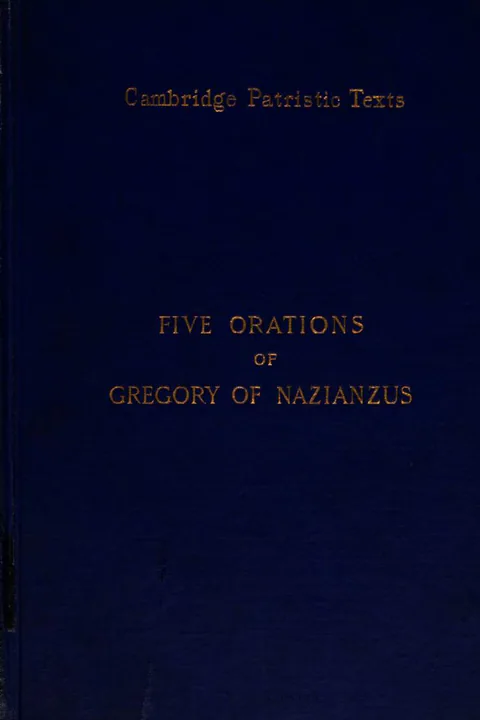
Biography
Cappadocian theologian and poet whose orations gave influential expression to pro-Nicene teaching on the Trinity and the full humanity of Christ.
Cappadocian and classical formation
Gregory was born near Nazianzus into a landholding Christian family. His father, also named Gregory, served as bishop of Nazianzus, while his mother Nonna appears prominently in his later recollections. Gregory studied at several eastern centers before reaching Athens, where he formed a close friendship with Basil of Caesarea. Their education immersed them in grammar, rhetoric, philosophy, and classical literature. Gregory later used that training in sermons, letters, autobiographical poems, and theological verse. He hoped for a life of study and prayer, but family and ecclesiastical expectations repeatedly drew him into public ministry. [1][2]
Ordination and contested offices
Gregory was ordained priest by his father around 361, apparently against his wishes. He withdrew for a time and then returned to assist at Nazianzus, explaining his flight and his understanding of ministry in Oration 2. In 372 Basil appointed him bishop of Sasima as part of a jurisdictional struggle in Cappadocia. Gregory resented the appointment and seems never to have established an effective ministry there. The episode damaged his friendship with Basil, though their theological and personal ties endured. Gregory later helped govern the church at Nazianzus and again sought retirement after his parents died. [1][2]
Preaching at Constantinople
In 379 a small pro-Nicene group invited Gregory to Constantinople, where churches remained divided after decades of controversy. From a house church called the Anastasia he preached the five discourses now known as the Theological Orations. These sermons treated the limits of theological speech, the unity and distinction of Father, Son, and Holy Spirit, and the scriptural language used of Christ. Imperial support under Theodosius I altered the balance of power. Gregory was installed as bishop and briefly presided at the Council of Constantinople in 381 after the death of Meletius of Antioch. [1][2]
Resignation, poetry, and final years
Questions about the regularity of Gregory's transfer to Constantinople, together with broader disputes at the council, led him to resign. Oration 42 records his farewell to the city. He returned to Cappadocia, assisted the church at Nazianzus for a time, and then withdrew to the family estate at Arianzus. His final years produced a large body of poetry that reflects on doctrine, grief, friendship, conflict, and his own unsettled career. He died around 390. The poems and letters complicate the public image of a triumphant churchman by preserving his frustration with episcopal politics and his desire for quiet study. [1][2]
Works and bibliography
30 works in TrinityLibrary
Letters — Division 1
Correspondence from the collected letters of Gregory of Nazianzus: To Nectarius, Bishop of Constantinople. (Ep. CCII.). Topics include the soul, faith, and the incarnation.Letters — Division 2
Correspondence from the collected letters of Gregory of Nazianzus: Division 2. Topics include truth, prayer, and the soul.Letters — Division 3
Correspondence from the collected letters of Gregory of Nazianzus: Division 3. Topics include prayer, the soul, and suffering.Orations — Introduction to Oration 4 and 5
Gregory of Nazianzus preaches Introduction to Oration 4 and 5 in Orations. The opening subject is “julian the emperor (1888). preface to the online edition.”Orations — Oration 1
Gregory of Nazianzus preaches Oration 1 in Orations. The opening subject is “on easter and his reluctance,.” Topics include suffering.Orations — Oration 12
Gregory of Nazianzus preaches Oration 12 in Orations. The opening subject is “to his father, when he had entrusted to him the care of the church of nazianzus.” Topics include the soul.Orations — Oration 16
Gregory of Nazianzus preaches Oration 16 in Orations. The opening subject is “on his father's silence, because of the plague of hail.” Topics include anger, the soul, and prayer.Orations — Oration 18
Gregory of Nazianzus preaches Oration 18 in Orations. The opening subject is “oration xviii.” Topics include prayer, the soul, and pastoral ministry.Orations — Oration 2
Gregory of Nazianzus preaches Oration 2 in Orations. The opening subject is “in defence of his flight to pontus, and his return, after his ordination to the priesthood, with an exposition of the character of the priestly office.” Topics include the soul, pastoral ministry, and the law.Orations — Oration 21
Gregory of Nazianzus preaches Oration 21 in Orations. The opening subject is “on the great athanasius, bishop of alexandria.” Topics include virtue, the Trinity, and church unity.Other historically significant writings
- Orationsfourth century · Greek · Theological and occasional speeches · accepted
- Lettersfourth century · Greek · Correspondence · accepted
- Poemata Arcanalate fourth century · Greek · Theological poetry · accepted
Theology & thought
One God in three
Gregory speaks of one divine nature in Father, Son, and Holy Spirit while preserving the personal distinctions named in their relations of origin. His orations resist both division of the Godhead and any account that reduces the Son or Spirit to creatures.
Primary texts:Orations — Oration 27Orations — Oration 28Orations — Oration 29Orations — Oration 30
The limits of theological speech
Theology requires moral and intellectual discipline because God is not an object mastered by verbal skill. Gregory distinguishes what Christians may confess from claims that pretend to comprehend the divine essence.
Primary texts:Orations — Oration 27Orations — Oration 28
Christ's complete humanity
Against Apollinarian accounts, Gregory insisted that the eternal Word assumed a complete human nature, including a rational mind. Salvation reaches the whole human condition because the whole is united to Christ.
Primary texts:Letters — Division 1Orations — Oration 29
The divinity of the Holy Spirit
Gregory argued that Scripture's pattern and the church's worship disclose the Spirit's divine status. He described doctrinal understanding as historically clarified without treating revelation as a late human invention.
Primary texts:Orations — Oration 41
Historical timeline
Approximate and disputed dates are marked rather than silently normalized.
- education
Studies at Athens
Pursued advanced education and became a close friend of Basil of Caesarea. [1]
- office
Ordained priest
Ordained by his father at Nazianzus and later reflected on his reluctance in Oration 2. [1]
Read Orations — Oration 2 - office
Appointed bishop of Sasima
Received an unwanted episcopal appointment from Basil during a dispute over Cappadocian sees. [1]
- office
Ministry at Constantinople
Preached the Theological Orations and led the city's pro-Nicene congregation. [1]
- council
Council and resignation
Briefly presided at the Council of Constantinople, then resigned and left the capital. [1]
Relationships & influence
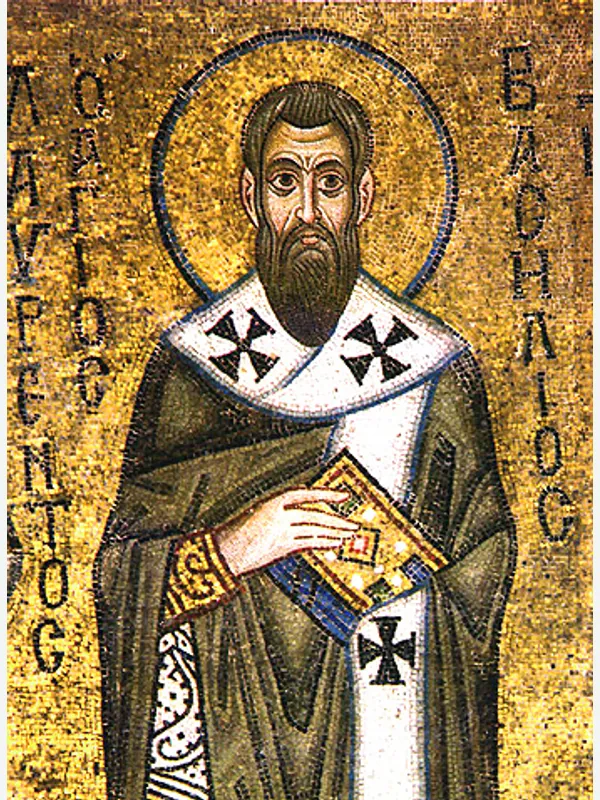
Their friendship began at Athens and continued through ascetic study, correspondence, doctrinal work, and periods of serious disagreement.
Documented personal relationship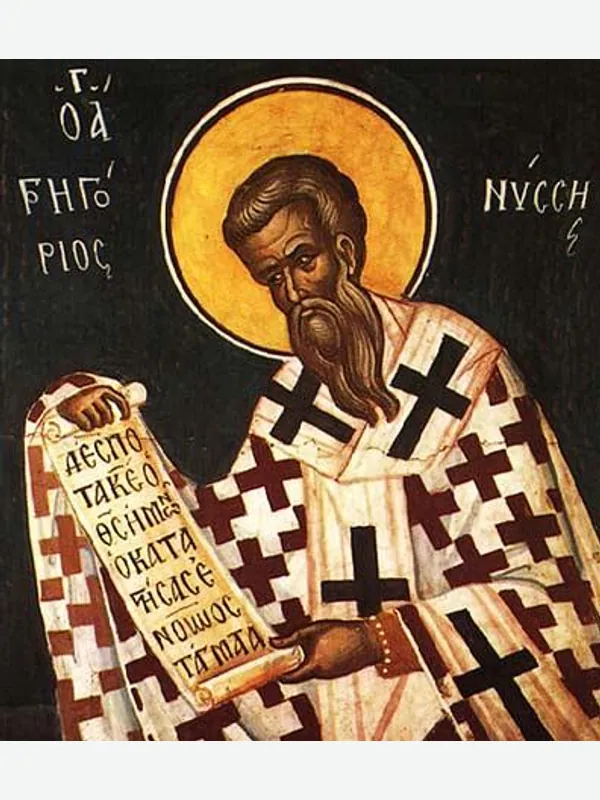
The two Gregories belonged to the same Cappadocian pro-Nicene network and participated in the church politics surrounding Constantinople.
Documented personal relationshipGregory's letters opposed Apollinarian Christology by insisting that Christ assumed a complete human mind; this is a literary controversy, not proof of a meeting.
Later or textual influence — no personal contact implied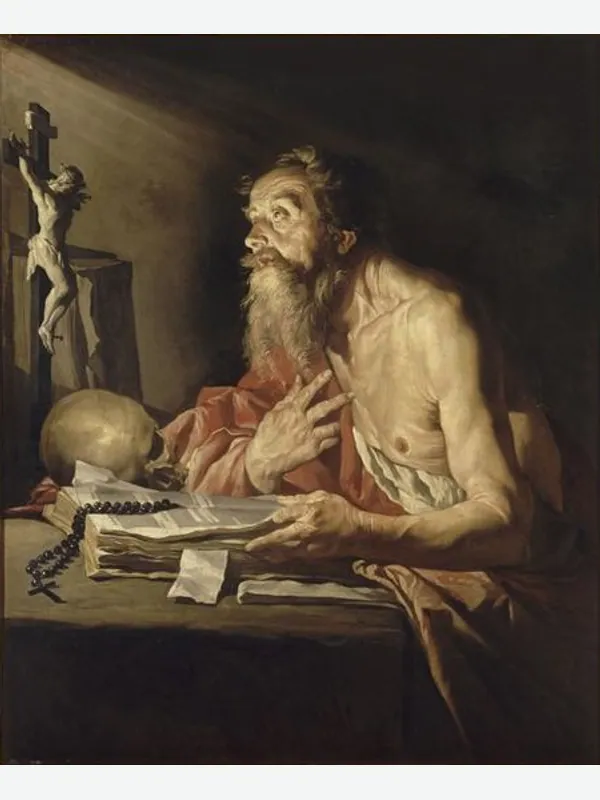
Jerome heard Gregory at Constantinople and later remembered him as a teacher in the interpretation of Scripture.
Documented personal relationshipThe Theologian in Christian memory
Eastern Christian tradition gives Gregory the title Theologian, a distinction shared by only a few saints, and reads his feast together with Basil and John Chrysostom among the Three Holy Hierarchs. Greek and Latin theologians drew on his Trinitarian and Christological formulas. Roman Catholic tradition also honors him as a Doctor of the Church, while modern scholarship has recovered his poetry and letters as evidence for the costs and ambiguities of episcopal life. [1][2]
Sources & further reading
Reader-facing prose and editorial evidence are kept distinct. Source status reflects link and identity checks, not endorsement of every claim in a source.
- scholarshipGregory of Nazianzus on the Trinity and the Knowledge of Godverified
Christopher A. Beeley · Oxford University Press · 2008
- critical editionSt Gregory of Nazianzus: Poemata Arcanaverified
Claudio Moreschini and D. A. Sykes · Oxford University Press · 1997
- referenceGregory, St, of Nazianzusverified
Encyclopaedia Britannica, 11th edition · 1911
- primaryOrationsverified
Gregory of Nazianzus
- primaryLettersverified
Gregory of Nazianzus