
Theologian · Philosopher
Thomas Aquinas
- Born
- c. 1225Roccasecca near Aquino, Kingdom of Sicily
- Died
- 7 March 1274Fossanova Abbey
Thomas Aquinas was an Italian Dominican friar, biblical commentator, philosopher, and university theologian. Educated at Monte Cassino, Naples, Paris, and Cologne, he studied under Albert the Great and taught theology in Paris and Italy. His Summa contra gentiles, Summa theologiae, disputed questions, biblical commentaries, and Aristotle commentaries reshaped medieval intellectual life.
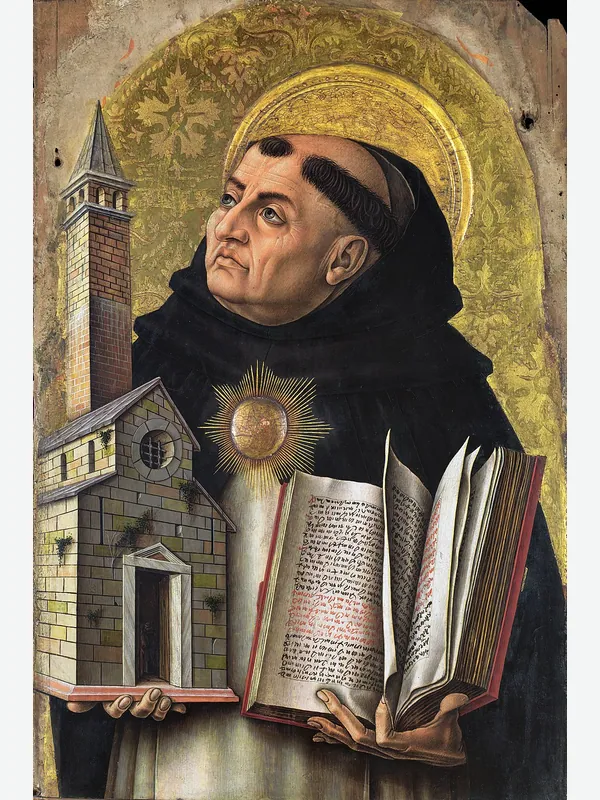
Start here
- CCCatena Aurea — Commentary on John — Chapter 1Thomas AquinasMedievalCatena Aurea — Commentary on John — Chapter 1c. 1264
- CCCatena Aurea — Commentary on Matthew — Chapter 1Thomas AquinasMedievalCatena Aurea — Commentary on Matthew — Chapter 1c. 1264
 Ninety-Nine Homilies upon the Epistles and Gospels for Forty-Nine Sundays of the Christian YearThomas AquinasNinety-Nine Homilies upon the Epistles and Gospels for Forty-Nine Sundays of the Christian Yearc. 1270
- SISumma Theologiae — First Part — Treatise on the Most Holy Trinity — IntroductionThomas AquinasMedievalSumma Theologiae — First Part — Treatise on the Most Holy Trinity — Introductionc. 1264
Biography
Thirteenth-century Dominican theologian whose synthesis of Christian doctrine, biblical exegesis, and Aristotelian philosophy became a central reference point in Western theology.
Family, education, and Dominican vocation
Thomas was born around 1225 into a prominent family near Aquino. As a child he studied at Monte Cassino, then continued at the University of Naples, where new Latin translations of Aristotle and contact with the recently founded Dominican order shaped his intellectual direction. He joined the Dominicans despite family opposition. After a period of confinement by his family, he continued north, studying in Paris and then at Cologne under Albert the Great. Albert's project of serious engagement with Greek and Arabic philosophy became decisive for Thomas's own work. [1]
Teaching in Paris and Italy
Thomas returned to Paris to complete the demanding theological course centered on Scripture, Peter Lombard's Sentences, public disputation, and preaching. He became master of theology in 1256 and occupied the Dominican chair until 1259. Rotations within the order then took him to Italian centers including Orvieto and Rome. During these years he taught, preached, conducted disputed questions, and composed major works, including the Summa contra gentiles and the opening portions of the Summa theologiae. His writing grew directly from the tasks of a medieval theologian: biblical commentary, doctrinal organization, philosophical analysis, and public debate. [1]
Second Paris regency and final years
Called back to Paris in 1268, Thomas entered debates over mendicant teaching, the interpretation of Aristotle, the unity of the intellect, and whether reason could demonstrate that the world began in time. He pursued a mediating approach that distinguished what reason could establish from what was known through revelation. Returning to Naples in 1272, he continued teaching and writing but stopped work late in 1273 after an experience he interpreted as making his writings seem inadequate by comparison. He died at Fossanova in March 1274 while traveling toward the Council of Lyon. Some positions associated with him were caught up in the Paris condemnations of 1277, but his authority grew, especially within the Dominican order; he was canonized in 1323. [1][2]
Works and bibliography
799 works in TrinityLibrary
Catena Aurea — Commentary on John — Chapter 1
Thomas Aquinas gathers earlier Christian interpretations of John, Chapter 1, allowing readers to compare explanations of the Gospel passage. Topics include baptism, divine grace, and the Holy Spirit.Catena Aurea — Commentary on John — Chapter 10
Thomas Aquinas gathers earlier Christian interpretations of John, Chapter 10, allowing readers to compare explanations of the Gospel passage. Topics include the soul, love, and the law.Catena Aurea — Commentary on John — Chapter 11
Thomas Aquinas gathers earlier Christian interpretations of John, Chapter 11, allowing readers to compare explanations of the Gospel passage. Topics include resurrection, prayer, and the soul.Catena Aurea — Commentary on John — Chapter 12
Thomas Aquinas gathers earlier Christian interpretations of John, Chapter 12, allowing readers to compare explanations of the Gospel passage. Topics include the soul, resurrection, and care for the poor.Catena Aurea — Commentary on John — Chapter 13
Thomas Aquinas gathers earlier Christian interpretations of John, Chapter 13, allowing readers to compare explanations of the Gospel passage. Topics include love, resurrection, and baptism.Catena Aurea — Commentary on John — Chapter 14
Thomas Aquinas gathers earlier Christian interpretations of John, Chapter 14, allowing readers to compare explanations of the Gospel passage. Topics include the Holy Spirit, love, and truth.Catena Aurea — Commentary on John — Chapter 15
Thomas Aquinas gathers earlier Christian interpretations of John, Chapter 15, allowing readers to compare explanations of the Gospel passage. Topics include love, divine grace, and the Holy Spirit.Catena Aurea — Commentary on John — Chapter 16
Thomas Aquinas gathers earlier Christian interpretations of John, Chapter 16, allowing readers to compare explanations of the Gospel passage. Topics include the Holy Spirit, truth, and love.Catena Aurea — Commentary on John — Chapter 17
Thomas Aquinas gathers earlier Christian interpretations of John, Chapter 17, allowing readers to compare explanations of the Gospel passage. Topics include prayer, church unity, and the Holy Spirit.Catena Aurea — Commentary on John — Chapter 18
Thomas Aquinas gathers earlier Christian interpretations of John, Chapter 18, allowing readers to compare explanations of the Gospel passage. Topics include truth, the law, and judgment.Other historically significant writings
- Summa contra gentilesc. 1259–1265 · Latin · Theological synthesis · accepted
- Commentary on the Sentencesc. 1252–1256 · Latin · Scholastic commentary · accepted
Theology & thought
Theology, philosophy, and modes of knowing
Aquinas distinguished theology grounded in divine revelation from philosophical disciplines grounded in principles available to natural reason. The distinction did not prevent both disciplines from treating some of the same realities under different formal aspects.
Primary texts:Summa theologiae I, question 1Summa contra gentiles I
God, creation, and participation
Thomas argued from created effects toward knowledge that God exists while insisting that God's essence exceeds creaturely comprehension. Creatures possess being by participation; God is not one being among others but subsistent being itself.
Primary texts:Summa theologiae I, questions 2–13
Nature, grace, virtue, and beatitude
Aquinas treated grace as God's gift that heals and elevates created nature rather than abolishing it. Human action is analyzed through powers, habits, virtues, law, and final beatitude, with charity giving form to the Christian virtues.
Primary texts:Summa theologiae I-II and II-II
Biblical interpretation
Although later reception often emphasizes his systematic works, Aquinas's profession was theological and his teaching began with Scripture. His commentaries and the Catena Aurea place close exposition in conversation with patristic authorities.
Primary texts:Catena Aurea — Commentary on John — Chapter 1Catena Aurea — Commentary on Matthew — Chapter 1
Historical timeline
Approximate and disputed dates are marked rather than silently normalized.
- life
Joined the Dominican order
Entered the Order of Preachers while studying at Naples despite family opposition. [1]
- education
Study under Albert the Great
Sent to Cologne to study under Albert, whose engagement with Aristotle strongly influenced him. [1]
- office
Master of theology at Paris
Received the doctorate and began his first regency in the Dominican chair. [1]
- office
Established teaching at Naples
Returned to Italy and taught at the Dominican house of studies in Naples. [1]
Relationships & influence
Albert supervised Thomas's study at Cologne and promoted his further theological training at Paris.
Documented personal relationship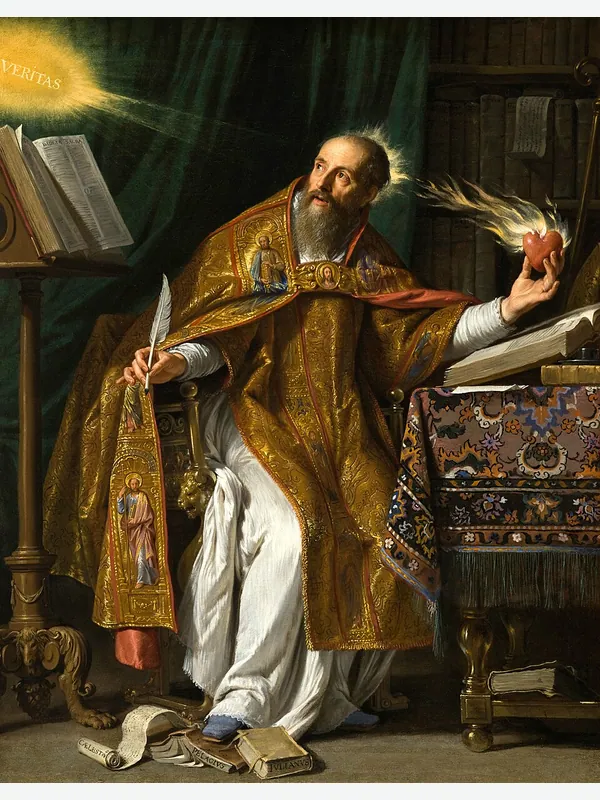
Augustine was a major patristic authority throughout Aquinas's theology; the relationship is textual and historical, not personal.
Later or textual influence — no personal contact implied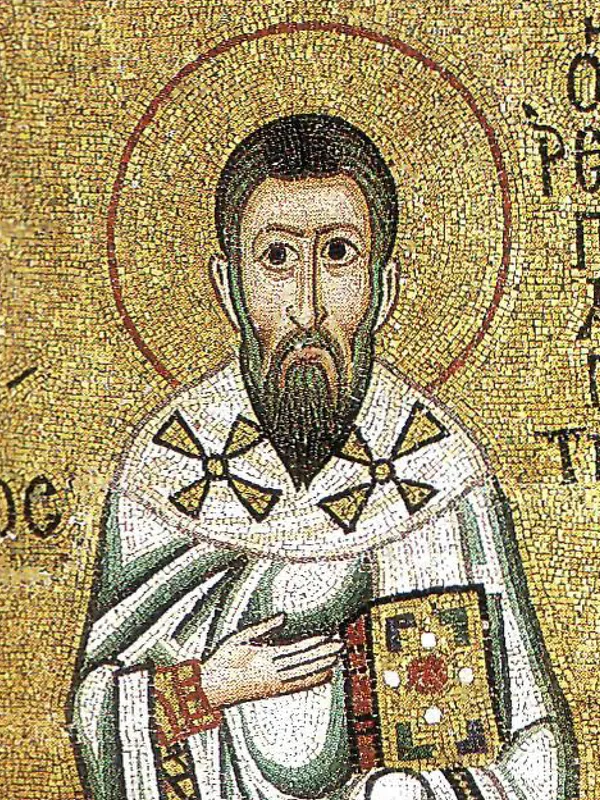
Works transmitted under the name Dionysius provided an important Neoplatonic and theological source for Aquinas.
Later or textual influence — no personal contact impliedReception and Thomism
Aquinas's positions were controversial in his own century and developed into multiple later Thomist traditions rather than one unchanged system. The Dominican order championed his work; the Roman Catholic Church repeatedly affirmed his importance, especially from the nineteenth-century Thomist revival onward. Protestant and Eastern Christian readers have engaged him selectively, often admiring his philosophical and doctrinal precision while disputing particular accounts of grace, merit, sacraments, or ecclesial authority. [1]
Sources & further reading
Reader-facing prose and editorial evidence are kept distinct. Source status reflects link and identity checks, not endorsement of every claim in a source.
- scholarshipThomas Aquinasverified
Stanford Encyclopedia of Philosophy
- scholarshipPhilosophy and Christian Theologyverified
Stanford Encyclopedia of Philosophy
- scholarshipThomas Aquinas: Influence and Legacyverified
Stanford Encyclopedia of Philosophy
- authorityThomas Aquinas (Q9438)verified
Wikidata