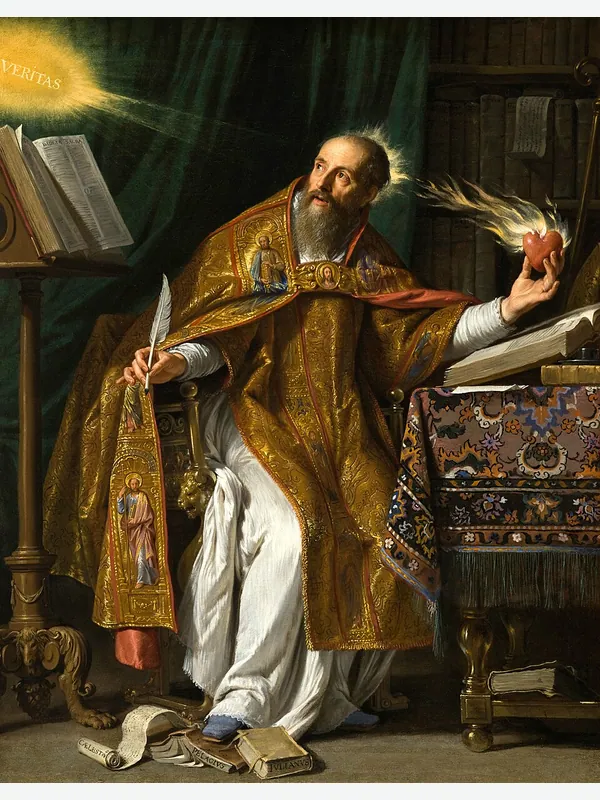
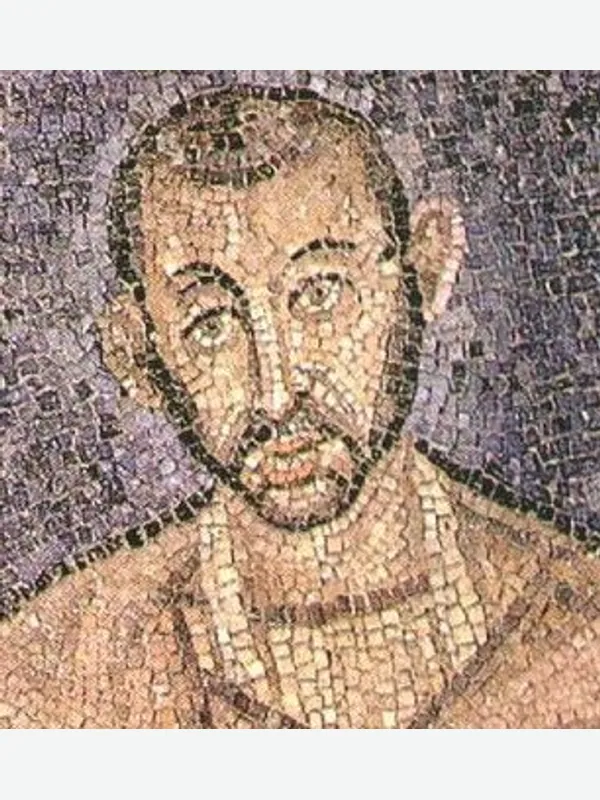
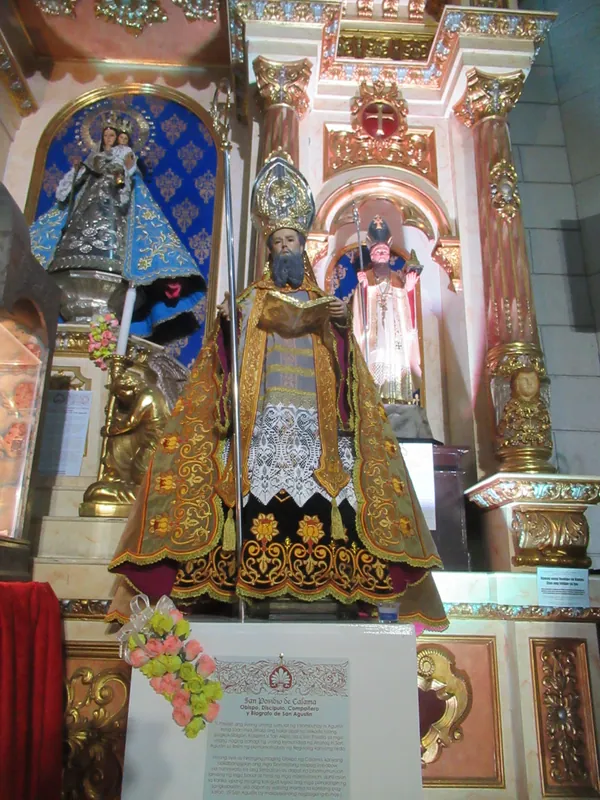
Augustine of Hippo was a North African rhetorician, convert, priest, bishop, biblical interpreter, and philosopher. His writings on creation, memory, language, the Trinity, the church, grace, freedom, and history shaped Latin Christianity for centuries. His mature thought emerged through pastoral work and controversies with Manichaeans, Donatists, Pelagians, and other late-antique interlocutors.
North African bishop and late-antique Christian thinker whose writings became foundational for Western theology, philosophy, biblical interpretation, and spirituality.
Education and early religious search
Augustine was born at Thagaste in Roman Africa to Patricius and Monnica. His education in grammar and rhetoric took him to Madauros and Carthage and prepared him for a teaching career. As a young man he read Cicero's Hortensius, an encounter he later described as awakening a desire for wisdom. For roughly nine years he belonged to the hearers of Manichaeism, attracted by its claims to rational explanation of evil and Scripture. He taught rhetoric in Carthage, Rome, and finally Milan, where he held a publicly supported chair and moved within the orbit of the imperial court. [1][2]
Conversion, baptism, and return to Africa
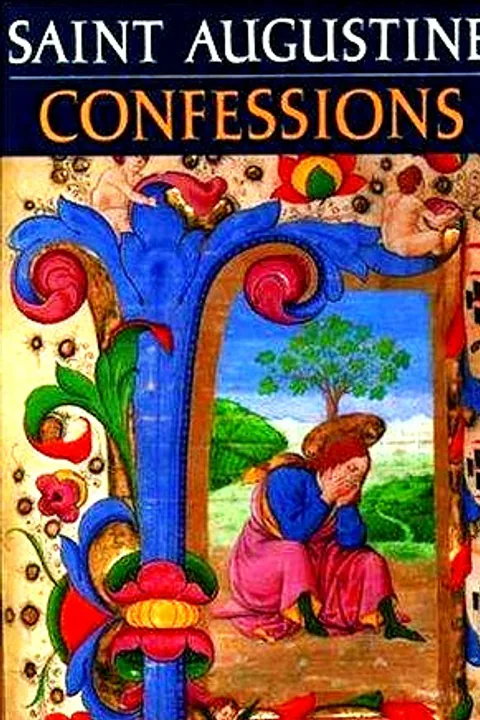
In Milan, Augustine encountered the preaching and biblical interpretation of Ambrose and read Latin Platonist texts that helped him conceive immaterial reality and divine transcendence. His Confessions presents the change as intellectual, moral, and ecclesial, culminating in his baptism by Ambrose at Easter 387 together with his son Adeodatus. After Monnica's death at Ostia, Augustine eventually returned to North Africa, formed an ascetic community, and was ordained priest at Hippo in 391. He became coadjutor and then bishop, an office he held until his death. [1][2]
Bishop, controversialist, and author
Augustine's episcopal work combined preaching, scriptural exposition, adjudication, correspondence, monastic oversight, and controversy. Against Manichaeism he defended creation's goodness and a privative account of evil. In the Donatist conflict he argued for the catholic unity of the church and the objective validity of sacraments independent of a minister's moral standing. The Pelagian controversy drew him into increasingly detailed accounts of original sin, grace, freedom, perseverance, and predestination. His major works include the Confessions, On Christian Teaching, On the Trinity, and The City of God, alongside sermons, letters, biblical expositions, and polemical treatises. He died at Hippo in 430 while the Vandals were besieging the city. [1][2]
Augustin replies to a letter sent by Julian, as it was said, to Rome; and first of all vindicates the catholic doctrine from his calumnies; then discovers and confutes the heretical sense of the Pelagians hidden in that profession of faith which the author of the letter opposed to the catholics.
He undertakes to examine the second letter of the Pelagians, filled, like the first, with calumnies against the Catholics-a letter that was sent by them to Thessalonica in the name of eighteen bishops; and, first of all, he shows, by the comparison of the heretical writings with one another, that the Catholics are by no means falling into the errors of the manicheans in detesting the dogmas of the Pelagians. He repel
Augustin goes on to refute other matters which are calumniously objected by the Pelagians in the same letter sent to Thessalonica; and expounds, in opposition to their heresy, what those who are truly Catholic say concerning the utility of the law; what they teach of the effect and virtue of baptism; what of the discrepancy between the two testaments, the old and the new; what concerning the righteousness and perfect
After having set aside in the former books the Calumnies hurled against the Catholics, Augustin here proceeds to open up the snares which lie hidden in the remaining part of the second epistle of the Pelagians, in the five heads of their doctrine-In the praise, to wit, of the creature, the praise of marriage, the praise of the law, the praise of free will, and the praise of the saints; in connection with which heads
A letter of Augustin 2 to Boniface, who, as we learn from Epistle 220, was Tribune, and afterwards Count in Africa. In it Augustin shows that the heresy of the Donatists has nothing in common with that of Arius; and points out the moderation with which it was possible to recall the heretics to the communion of the Church through awe of the imperial laws. He adds remarks concerning the savage conduct of the Donatists
The occasion and date of the composition of this treatise are indicated in a statement which Augustin makes in the seventeenth chapter of the First Book of his Retractations .
Augustine examines how God’s grace and human willing belong together. He reads biblical commands and promises to explain why obedience depends on divine help without making human choices meaningless.
Wherein he shows that Pelagius is disingenuous in his confession of grace, inasmuch as he places grace either in nature and free will, or in law and teaching; and, moreover, asserts that it is merely the "possibility" (as he calls it) of will and action, and not the will and action itself, which is assisted by divine grace; and that this assisting grace, too, is given by God according to men's merits; whilst he furth
Wherein Augustin shows that Pelagius really differs in no respect, on the question of original sin and the baptism of infants, from his follower Coelestius, who, refusing to acknowledge original sin and even daring to deny the doctrine in public, was condemned in trials before the bishops - first at carthage, and afterwards at rome; for this question is not, as these heretics would have it, one wherein persons might
On the Trinityc. 399–419 · Latin · Theological treatise · accepted
The City of Godc. 413–426 · Latin · Theological and historical apologetic · accepted
Theology & thought
Sin, grace, and freedom
Augustine's mature anti-Pelagian theology stressed humanity's dependence on prevenient and healing grace. He affirmed human willing while arguing that the will, wounded by sin, cannot turn to God or persevere in saving good without divine action.
His formulations developed across several controversies and should be read chronologically rather than flattened into a single timeless system.
In On the Trinity Augustine defended Nicene confession and explored vestiges of triune life in the human mind. His psychological analogies are exploratory aids, not attempts to reduce God to human faculties.
Augustine treated biblical interpretation as a disciplined practice ordered toward love of God and neighbor. On Christian Teaching distinguishes things from signs, addresses linguistic and cultural learning, and joins interpretation to Christian teaching and rhetoric.
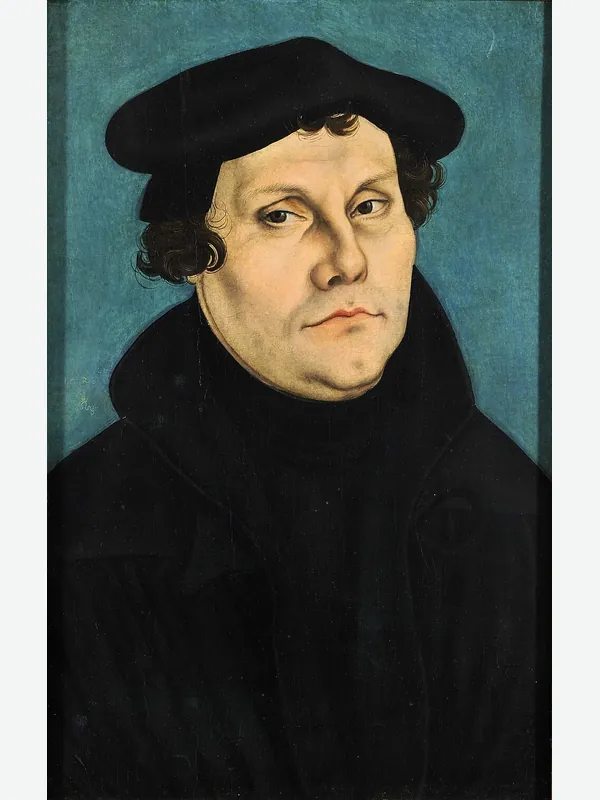
Augustine's writings on grace influenced Luther and other Western reformers many centuries later; this was textual reception, not personal contact.
Later or textual influence — no personal contact implied
Reception across traditions
Augustine is honored as a major father and saint in Western Christianity and is also received within Eastern Christianity, though particular Augustinian formulations of original sin, grace, predestination, and the Spirit's procession have been assessed differently. Medieval scholastics, Protestant reformers, Roman Catholic theologians, and modern philosophers have each appropriated different parts of his corpus. Those later receptions should be distinguished from Augustine's own late-antique North African context. [1]
Sources & further reading
Reader-facing prose and editorial evidence are kept distinct. Source status reflects link and identity checks, not endorsement of every claim in a source.