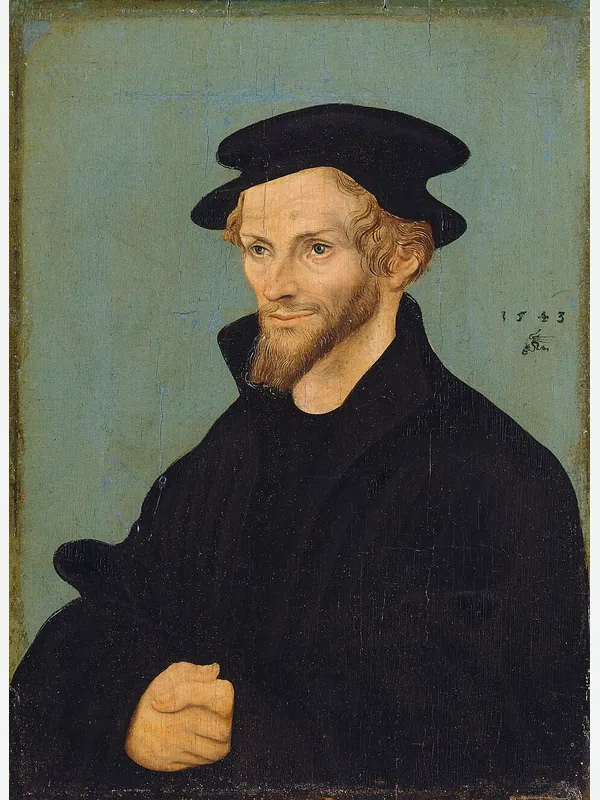
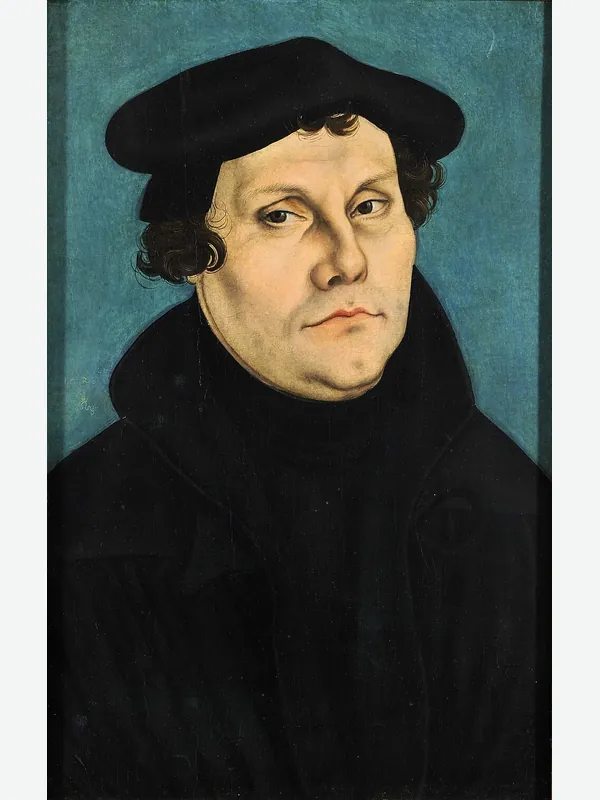
Philipp Melanchthon was a German humanist, educator, and reformer whose career joined classical learning to biblical theology. Appointed professor of Greek at Wittenberg in 1518, he became Martin Luther's closest academic colleague. He drafted the Augsburg Confession and its Apology, revised the Loci communes over several decades, and helped reorganize schools and universities across Protestant Germany.
Renaissance humanism · ReformationHistorical period
Theologian · Humanist · ProfessorPrincipal roles
Latin · German · Greek · Biblical HebrewWriting languages
5Works available here
Biography
German humanist, educator, and theologian who drafted the Augsburg Confession and gave early Lutheran teaching a durable academic and confessional form.
Humanist education
Melanchthon was born Philipp Schwartzerdt at Bretten in 1497. His great-uncle, the Hebrew scholar Johannes Reuchlin, encouraged his education and supplied the Greek form of the family name by which he became known. Melanchthon studied at Heidelberg and Tübingen, taking his master's degree while still a teenager. His early teaching and publications ranged across Greek literature, rhetoric, logic, philosophy, mathematics, and biblical languages. That breadth remained characteristic of his later work: theology belonged within a larger program of linguistic and moral education rather than apart from it. [1][2]
Wittenberg and the Reformation
In 1518 Melanchthon accepted the chair of Greek at the young University of Wittenberg. His inaugural address called for reform of university study through close attention to languages and ancient texts. Friendship with Martin Luther quickly drew him into the developing evangelical movement. He lectured on Scripture as well as the liberal arts, published the first edition of his Loci communes in 1521, and worked beside Luther on translation, visitation, education, and church reform. Melanchthon's gifts were different from Luther's. He excelled at orderly exposition, negotiation, and the careful drafting of public documents. [1][2]
Confession, controversy, and later years
Melanchthon prepared the Augsburg Confession for presentation to Emperor Charles V in 1530 and answered its Roman Catholic confutation in the Apology. He continued to revise both his theological formulations and his teaching materials. His efforts to preserve political peace and evangelical unity sometimes produced language that colleagues judged too accommodating, especially after Luther's death. Disputes over free will, the Lord's Supper, and adiaphora sharpened divisions among Lutheran theologians. Melanchthon nevertheless remained at Wittenberg, teaching and advising churches and schools until his death in 1560. [1][2]
Melanchthon answers objections to the Augsburg Confession, defending Lutheran teaching on justification, the sacraments, worship, and the church through biblical and historical argument.
Melanchthon answers objections to the Augsburg Confession, defending Lutheran teaching on justification, the sacraments, worship, and the church through biblical and historical argument.
The Lutheran confession presented at Augsburg in 1530 explains evangelical teaching on faith, the church, and the sacraments, then addresses disputed practices in church life.
The Lutheran confession presented at Augsburg in 1530 explains evangelical teaching on faith, the church, and the sacraments, then addresses disputed practices in church life.
Melanchthon examines claims for papal authority and the office of bishops, arguing from Scripture and church history about the ministry and government of the church.
Loci communesfirst edition 1521; substantially revised · Latin · Systematic theology · accepted
Commentary on Romanssixteenth century · Latin · Biblical commentary · accepted
Theology & thought
Justification and the promise of the gospel
Melanchthon placed the promise of forgiveness in Christ at the center of justification. Faith receives that promise, and good works follow as the fruits of faith rather than the ground of acceptance before God.
The Augsburg Confession defines the church through the assembly in which the gospel is taught purely and the sacraments are administered according to the gospel. Melanchthon sought visible concord where he believed it could be reached without surrendering this doctrinal center.
Melanchthon treated language, history, dialectic, rhetoric, and moral philosophy as necessary preparation for responsible public life and careful reading of Scripture. His curricular work helped make humanist learning a lasting feature of Lutheran schools and universities.
Primary texts:On Improving the Studies of YouthLoci communes
Historical timeline
Approximate and disputed dates are marked rather than silently normalized.
Luther and Melanchthon worked together at Wittenberg in university reform, biblical translation, confession, and church organization, while retaining distinct temperaments and emphases.
Documented personal relationship
JR
johannes reuchlinmentorComing soon
Reuchlin encouraged his great-nephew's humanist education and recommended him for the Wittenberg appointment.
Documented personal relationship
MC
Martin ChemnitzinfluenceComing soon
Chemnitz attended Melanchthon's lectures and later taught from the Loci, though he did not follow every development in Melanchthon's later theology.
Documented personal relationship
Reception and contested legacy
Lutheran churches receive the Augsburg Confession and Apology as confessional texts, while historians also study Melanchthon as a humanist educator and political negotiator. Later Lutheran disputes often made his name a boundary marker. Some praised his learning and moderation; others associated selected late formulations with doctrinal compromise. Modern scholarship pays closer attention to the development of his thought across successive editions and controversies. [1]
Sources & further reading
Reader-facing prose and editorial evidence are kept distinct. Source status reflects link and identity checks, not endorsement of every claim in a source.