Topic
Prayer
Devotional and theological writings on prayer and worship.
1,954 works · 20 hymns · Oriental Orthodox · Reformed · Patristic/Undivided Church · Methodist/Wesleyan
Works on Prayer
13 Ascetic Discourses — Discourse 11 On Abstinence
Philoxenus of Mabbug — [P. 420] THE ELEVENTH DISCOURSE: ON ABSTINENCE AND THE SUBJECTION OF THE BODY, WHICH SHEWETH THAT A MAN IS, THROUGH TRIBULATIONS, ABLE TO ENTER INTO THE SPIRITUAL COUNTRY OF THE ENJOYMENTS OF THE KNOWLEDGE OF CHRIST.
13 Ascetic Discourses — Discourse 13 Second Discourse on Fornication
Philoxenus of Mabbug — Philoxenus of Mabbug gives instruction in the ascetic life in Discourse 13 Second Discourse on Fornication, considering the habits and convictions involved in following Christ. Topics include the soul, sin, and the law.
13 Ascetic Discourses — Discourse 7 Second Discourse on the Fear of God
Philoxenus of Mabbug — Philoxenus of Mabbug gives instruction in the ascetic life in Discourse 7 Second Discourse on the Fear of God, considering the habits and convictions involved in following Christ. The opening subject is “[p. 191] the seventh discourse: which sheweth that all the righteous men of old fulfilled the commandments of God in the fear of God.” Topics include love, the soul, and divine grace.
13 Ascetic Discourses — Discourse 9 Second Discourse on Poverty
Philoxenus of Mabbug — Philoxenus of Mabbug gives instruction in the ascetic life in Discourse 9 Second Discourse on Poverty, considering the habits and convictions involved in following Christ. Topics include the soul, baptism, and the law.
13 Ascetic Discourses — Introduction The Manuscripts of the Discourses
Philoxenus of Mabbug — Philoxenus of Mabbug gives instruction in the ascetic life in Introduction The Manuscripts of the Discourses, considering the habits and convictions involved in following Christ. The opening subject is “the manuscripts of the discourses of philoxenus.” Topics include the Trinity.1650 Scottish Psalter
Confessional document — That man hath perfect blessedness who walketh not astray In counsel of ungodly men, nor stands in sinners' way,A Body of Divinity
Thomas Ridgley — Thomas Ridgley’s four-volume exposition of the Westminster Larger Catechism, presenting a connected system of Reformed doctrine and Christian practice.A Call to the Unconverted to Turn and Live
Richard Baxter — Baxter's evangelistic sermons on Ezekiel 33:11, urging the unconverted to turn to God and live, prefaced by a short account of Baxter's life from a later reprint.A Commentary on the Apostles' Creed
Tyrannius Rufinus — A brief profession of Christian faith in the Father, Son, and Holy Spirit, confessing Christ’s life and resurrection, the church, forgiveness, and the life to come.
A Letter from Origen to Africanus
Origen of Alexandria — Origen to Africanus, a beloved brother in God the Father, through Jesus Christ, His holy Child, greeting. Your letter, from which I learn what you think of the Susanna in the Book of Daniel, which is used in the Churches, although apparently somewhat short, presents in its few words many problems, each of which demands no common treatment, but such as oversteps the character of a letter, and reaches the limits of a dA Letter from Origen to Gregory
Origen of Alexandria — 1. Greeting in God, my most excellent sir, and venerable son Gregory, from Origen. A natural readiness of comprehension, as you well know, may, if practice be added, contribute somewhat to the contingent end, if I may so call it, of that which any one wishes to practise. Thus, your natural good parts might make of you a finished Roman lawyer or a Greek philosopher, so to speak, of one of the schools in high reputatioA Letter to Origen from Africanus About the History of Susanna
Origen of Alexandria — Greeting, my lord and son, most worthy Origen, from Africanus. 1 In your sacred discussion with Agnomon you referred to that prophecy of Daniel which is related of his youth. This at that time, as was meet, I accepted as genuine. Now, however, I cannot understand how it escaped you that this part of the book is spurious. For, in sooth, this section, although apart from this it is elegantly written, is plainly a moreA Letter to the Reverend Mr. John Wesley in Answer to His Sermon Entitled 'Free Grace'
George Whitefield — Whitefield's open letter answering John Wesley's sermon Free Grace, defending election and final perseverance against Wesley's attack on predestination while pleading for continued love between the two evangelists; the classic statement of the Calvinist side of the Methodist controversy.A Manual of the Book of Psalms
Martin Luther — Luther introduces the Psalms as prayers and teaching for the church, explaining their themes and their use in faith, worship, suffering, and thanksgiving.A Metaphrase of the Book of Ecclesiastes
Gregory of Neocaesarea — These words speaketh Solomon, the son of David the king and prophet, to the whole Church of God, a prince most honoured, and a prophet most wise above all men. How vain and fruitless are the affairs of men, and all pursuits that occupy man! For there is not one who can tell of any profit attaching to those things which men who creep on earth strive by body and soul to attain to, in servitude all the while to what is
A Plain Account of Christian Perfection
John Wesley — Wesley's account, in its final 1777 form, of how his teaching on Christian perfection developed from 1725 onward, with extracts from his sermons, hymns, conference minutes and answers to objections, followed by his Brief Thoughts on Christian Perfection.
A Retrospect
Hudson Taylor — Hudson Taylor's account of his conversion, call to China, medical training, first years of missionary work and the experiences of answered prayer and faith that led to the founding of the China Inland Mission in 1865.A Ribband of Blue and Other Bible Studies
Hudson Taylor — Eight short Bible studies by Hudson Taylor, beginning with the 'ribband of blue' on the borders of Israel's garments in Numbers 15 and continuing with meditations on Psalm 1, Job, the Queen of Sheba, Ruth and the Shepherd's care.
A Short and Easy Method of Prayer
Jeanne Guyon — Madame Guyon's little manual of inward prayer, teaching simple recollected attention to God, abandonment and the prayer of quiet; condemned with other Quietist writings at the end of the seventeenth century, it was widely read by later Protestant pietists and holiness writers.A Treatise against Two Letters of the Pelagians — Book 1
Augustine of Hippo — Augustin replies to a letter sent by Julian, as it was said, to Rome; and first of all vindicates the catholic doctrine from his calumnies; then discovers and confutes the heretical sense of the Pelagians hidden in that profession of faith which the author of the letter opposed to the catholics.
A Treatise on Good Works
Martin Luther — Luther explains good works through faith and the Ten Commandments, directing attention to ordinary responsibilities toward God and neighbor.
A Treatise on Grace and Free Will
Augustine of Hippo — Augustine examines how God’s grace and human willing belong together. He reads biblical commands and promises to explain why obedience depends on divine help without making human choices meaningless.
A Treatise on the Anger of God
Lucius Caecilius Firmianus Lactantius — I Have often observed, Donatus, that many persons hold this opinion, which some philosophers also have maintained, that God is not subject to anger; since the divine nature is either altogether beneficent, and that it is inconsistent with His surpassing and excellent power to do injury to any one; or, at any rate, He takes no notice of us at all, so that no advantage comes to us from His goodness, and no evil from HiA Treatise on the Grace of Christ, and on Original Sin — Book 1
Augustine of Hippo — Wherein he shows that Pelagius is disingenuous in his confession of grace, inasmuch as he places grace either in nature and free will, or in law and teaching; and, moreover, asserts that it is merely the "possibility" (as he calls it) of will and action, and not the will and action itself, which is assisted by divine grace; and that this assisting grace, too, is given by God according to men's merits; whilst he furthA Treatise on the Predestination of the Saints — Book 2
Augustine of Hippo — In the first part of the book he proves that the perseverance by which a man perseveres in Christ to the end is God's gift; for that it is a mockery to ask of God that which is not believed to be given by God. Moreover, that in the Lord's prayer scarcely anything is asked for but perseverance, according to the exposition of the martyr cyprian, by which exposition the enemies to this grace were convicted before they wA Vindication of the Doctrine That the Sacrifice of the Mass Is Idolatry
John Knox — Knox's defence, delivered at Newcastle on 4 April 1550 before the Council of the North and Bishop Tunstall, of his teaching that the Mass is idolatry, argued by two syllogisms from Scripture against worship devised by human beings.
Aaron's Rod Blossoming
George Gillespie — OR, The Divine Ordinance of Church-Government VINDICATED, So as the present Erastian Controversie concerning the distinction of Civill and Ecclesiasticall Government, Excommunication, and Suspension, is fully debated and discussed, from the holy Scripture, from the Jewish and Christian Antiquities, from the consent of latter Writers, from the true nature and rights of Migistracy, and from the groundlesnesse of the chActa Archelai
Hegemonius — Source : Please note that this is the public domain, 19th century translation by S. D. F. Salmond. A new translation by Mark Vermes, based on the improved Beeson critical edition of the text, was published by Brepols (Turnhout, Belgium) in 2001.
Acts of Peter and Paul
Acts of Peter and Paul — It came to pass, after Paul went out of the island Gaudomeleta, 1 that he came to Italy; and it was heard of by the Jews who were in Rome, the elder of the cities, that Paul demanded to come to Caesar. Having fallen, therefore, into great grief and much despondency, they said among themselves: It does not please him that he alone has afflicted all our brethren and parents in Judaea and Samaria, and in all Palestine;Acts or Disputation against Fortunatus — Disputation of the First Day
Augustine of Hippo — Augustine of Hippo discusses the soul, sin, and faith in Acts or Disputation Against Fortunatus, Disputation of the First Day. The opening subject is “disputation of the first day.”
Address to Young Men on the Right Use of Greek Literature
Basil of Caesarea — Frederick Morgan PADELFORD, Essays on the Study and Use of Poetry by Plutarch and Basil the Great. Yale Studies in English 15 (1902) pp. 99-120. Address to young men on the right use of Greek literature.
Against Celsus — Book 2
Origen of Alexandria — The first book of our answer to the treatise of Celsus, entitled A True Discourse , which concluded with the representation of the Jew addressing Jesus, having now extended to a sufficient length, we intend the present part as a reply to the charges brought by him against those who have been converted from Judaism to Christianity. 1 And we call attention, in the first place, to this special question, viz., why Celsus
Against Celsus — Book 5
Origen of Alexandria — It is not, my reverend Ambrosius, because we seek after many words-a thing which is forbidden, and in the indulgence of which it is impossible to avoid sin 1 -that we now begin the fifth book of our reply to the treatise of Celsus, but with the endeavour, so far as may be within our power, to leave none of his statements without examination, and especially those in which it might appear to some that he had skilfully
Against Celsus — Book 6
Origen of Alexandria — In beginning this our sixth book, we desire, my reverend Ambrosius, to answer in it those accusations which Celsus brings against the Christians , not, as might be supposed, those objections which he has adduced from writers on philosophy . For he has quoted a considerable number of passages, chiefly from Plato, and has placed alongside of these such declarations of holy Scripture as are fitted to impress even the in
Against Celsus — Book 7
Origen of Alexandria — In the six former books we have endeavoured, reverend brother Ambrosius, according to our ability to meet the charges brought by Celsus against the Christians, and have as far as possible passed over nothing without first subjecting it to a full and close examination. And now, while we enter upon the seventh book, we call upon God through Jesus Christ, whom Celsus accuses, that He who is the truth of God would shed lAgainst Diodore of Tarsus and Theodore of Mopsuestia — Fragments of Book 1 against Diodore
Cyril of Alexandria — Surviving excerpts from Cyril of Alexandria’s writings, collected here as Against Diodore of Tarsus and Theodore of Mopsuestia, Fragments of Book 1 Against Diodore. Readers can examine passages preserved apart from their original complete works. The opening subject is “from his treatise against diodore bishop of tarsus 1.” Topics include the soul, truth, and the incarnation.Against Eunomius — Book 5
Gregory of Nyssa — Gregory of Nyssa discusses creation, the incarnation, and suffering in Against Eunomius, Book 5.Against Hierocles — English Translation
Eusebius of Caesarea — Eusebius of Caesarea discusses truth, the soul, and prayer in Against Hierocles, English Translation.Against Jovinianus — Book 1
Jerome — Jerome discusses marriage, virginity, and the law in Against Jovinianus, Book 1. The opening subject is “a denunciation of jovinianus (c. 40), and the praises of virginity and of jingle marriages derived from examples in the heathen world.”Against Jovinianus — Book 2
Jerome — Jerome discusses sin, fasting, and baptism in Against Jovinianus, Book 2.Against Mani
Ephrem the Syrian — Ephrem the Syrian discusses the soul, prayer, and suffering in Against Mani.Against Marcionists and Manichaeans
John Chrysostom — John Chrysostom discusses prayer, the incarnation, and the soul in Against Marcionists and Manichaeans. The opening subject is “against marcionists and manichaeans.”Against the Donatists — Appendix 1. The Trial of Felix, Bishop of Aptunga
Optatus of Milevis — Optatus of Milevis discusses prayer, the law, and truth in Against the Donatists, Appendix 1. The trial of Felix, Bishop of Aptunga. The opening subject is “acta purgationis felicis episcopi autumnitani.”Against the Donatists — Book 4
Optatus of Milevis — Optatus of Milevis discusses baptism, sin, and prayer in Against the Donatists, Book 4. The opening subject is “book the fourth.”Against the Donatists — Book 6
Optatus of Milevis — Optatus of Milevis discusses church unity, prayer, and virginity in Against the Donatists, Book 6. The opening subject is “i. the wickedness of the donatists in breaking or scraping the altars.”Against the Donatists — Book 7
Optatus of Milevis — Optatus of Milevis discusses church unity, the law, and sin in Against the Donatists, Book 7. The opening subject is “i. that the donatists can be received back into the communion of the church more easily than could have been their fathers who were guilty of betrayal.”Against the Epistle of Manichaeus Called Fundamental
Augustine of Hippo — Correspondence from the collected letters of Augustine of Hippo: Against the Epistle of Manichaeus Called Fundamental. Topics include the Holy Spirit, truth, and the soul.Against the Heathen — Book 2
Arnobius of Sicca — Arnobius of Sicca discusses the soul, knowledge, and suffering in Against the Heathen Book 2.Against the Heathen — Book 3
Arnobius of Sicca — Arnobius of Sicca discusses prayer, truth, and knowledge in Against the Heathen Book 3.Against the Heathen — Book 4
Arnobius of Sicca — Arnobius of Sicca discusses marriage, prayer, and anger in Against the Heathen Book 4.Against the Heathen — Book 6
Arnobius of Sicca — Arnobius of Sicca discusses prayer, idolatry, and suffering in Against the Heathen Book 6.Against the Heathen — Book 7
Arnobius of Sicca — Arnobius of Sicca discusses anger, care for the poor, and virginity in Against the Heathen Book 7.
Against the Heathen — Part 1
Athanasius of Alexandria — Athanasius challenges idolatry and argues that the order of creation points to the divine Word. He examines how human beings turned from the knowledge of God to the worship of created things.Against the Jews — Homily 2 (Missing Portion)
John Chrysostom — John Chrysostom discusses the law, idolatry, and divine grace in Against the Jews, Homily 2 (missing portion). The opening subject is “the page references embedded in the translation are for this publication by pradels et al., where refs. to the ms. pagination can be found.”Against the Jews — Homily 3
John Chrysostom — John Chrysostom discusses prayer, fasting, and sin in Against the Jews, Homily 3. The opening subject is “against those who keep the first paschal fast.”Against the Jews — Homily 6
John Chrysostom — John Chrysostom discusses sin, idolatry, and the law in Against the Jews, Homily 6.Against the Pelagians — Book 1
Jerome — Jerome discusses sin, divine grace, and virtue in Against the Pelagians, Book 1. The opening subject is “critobulus. it is true, atticus; but our rivals do not take the words in the sense i attached to them.”Against the Pelagians — Book 2
Jerome — Jerome discusses sin, divine grace, and justification in Against the Pelagians, Book 2. The opening subject is “in psalm xxxii. 5. one who speaks of himself as "holy," yet confesses his transgression.”Against Vigilantius
Jerome — Jerome discusses martyrdom, care for the poor, and prayer in Against Vigilantius.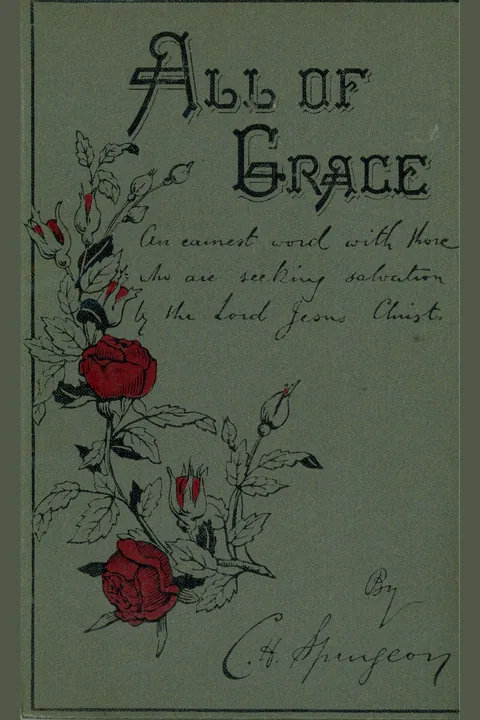
All of Grace
Charles Spurgeon — Spurgeon's short evangelistic book for those seeking salvation, explaining that God justifies the ungodly by grace through faith, and treating faith, repentance, regeneration, perseverance and the fear of falling away.