Topic
Grace
Treatises and sermons on divine grace, free will, and salvation.
2,598 works · 63 hymns · Oriental Orthodox · Reformed · Baptist · Patristic/Undivided Church
Works on Grace
13 Ascetic Discourses — Discourse 1 Prologue
Philoxenus of Mabbug — [Page 3], THE DISCOURSES UPON DISCIPLINE OF LIFE AND CHARACTER WHICH WERE DELIVERED BY THE BLESSED MAR PHILOXENUS, BISHOP OF MABBOGH, IN WHICH IS SET FORTH THE WHOLE ORDER OF INSTRUCTION ---- HOW A MAN SHOULD BEGIN THE DISCIPLESHIP OF CHRIST, AND IN WHAT LAWS AND MANNER OF LIFE HE SHOULD WALK UNTIL HE ARRIVETH AT SPIRITUAL LOVE, FROM WHICH IS BORN PERFECTION, AND IN WHICH WE BECOME CHILDREN OF THE LIKENESS OF CHRIST,
13 Ascetic Discourses — Discourse 11 On Abstinence
Philoxenus of Mabbug — [P. 420] THE ELEVENTH DISCOURSE: ON ABSTINENCE AND THE SUBJECTION OF THE BODY, WHICH SHEWETH THAT A MAN IS, THROUGH TRIBULATIONS, ABLE TO ENTER INTO THE SPIRITUAL COUNTRY OF THE ENJOYMENTS OF THE KNOWLEDGE OF CHRIST.
13 Ascetic Discourses — Discourse 13 Second Discourse on Fornication
Philoxenus of Mabbug — Philoxenus of Mabbug gives instruction in the ascetic life in Discourse 13 Second Discourse on Fornication, considering the habits and convictions involved in following Christ. Topics include the soul, sin, and the law.
13 Ascetic Discourses — Discourse 6 First Discourse on the Fear of God
Philoxenus of Mabbug — Philoxenus of Mabbug gives instruction in the ascetic life in Discourse 6 First Discourse on the Fear of God, considering the habits and convictions involved in following Christ. Topics include the soul, sin, and judgment.
13 Ascetic Discourses — Discourse 8 First Discourse on Poverty
Philoxenus of Mabbug — Philoxenus of Mabbug gives instruction in the ascetic life in Discourse 8 First Discourse on Poverty, considering the habits and convictions involved in following Christ. Topics include the law, baptism, and divine grace.
13 Ascetic Discourses — Discourse 9 Second Discourse on Poverty
Philoxenus of Mabbug — Philoxenus of Mabbug gives instruction in the ascetic life in Discourse 9 Second Discourse on Poverty, considering the habits and convictions involved in following Christ. Topics include the soul, baptism, and the law.
13 Ascetic Discourses — Introduction The Life of Philoxenus
Philoxenus of Mabbug — Akhsénâyâ, later named Philoxenus, was born in the third quarter of the Vth century at a village called Tahal 1 , which was situated in Beth Garmai, probably on the confines of Persia 2 ; of his parents and their rank and condition we know nothing, but as he was baptized it may be assumed that they were Christians or, at any rate, that they had leanings towards Christianity. His brother Addai is mentioned together wi1650 Scottish Psalter
Confessional document — That man hath perfect blessedness who walketh not astray In counsel of ungodly men, nor stands in sinners' way,1689 London Baptist Confession of Faith
Confessional document — A confession from the Baptist tradition, setting out its teaching, worship, discipline, or church order in an organized historical document.A Body of Divinity
Thomas Ridgley — Thomas Ridgley’s four-volume exposition of the Westminster Larger Catechism, presenting a connected system of Reformed doctrine and Christian practice.A Brief Bible History: A Survey of the Old and New Testaments
James Oscar Boyd; J. Gresham Machen — A survey of biblical history written for teacher training and popular reading, in thirty-eight short lessons: fifteen tracing the development of the church in Old Testament times from the beginnings in Genesis to the return from exile, and twenty-three on the life of Christ and the apostolic church from the intertestamental preparation to the close of the apostolic age, each lesson ending with review questions.A Call to the Unconverted to Turn and Live
Richard Baxter — Baxter's evangelistic sermons on Ezekiel 33:11, urging the unconverted to turn to God and live, prefaced by a short account of Baxter's life from a later reprint.A Christian Directory — Part 1: Christian Ethics
Richard Baxter — Baxter gives practical counsel on personal Christian conduct, addressing habits, temptations, conscience, and the ordering of daily life.A Christian Directory — Part 2: Christian Economics
Richard Baxter — Small capitals have been rendered in full capitals. Italics are indicated by underscores. Sidenotes refer to the following paragraph.A Christian Directory — Part 3: Christian Ecclesiastics
Richard Baxter — Baxter examines church life and ministry, offering guidance on worship, pastoral duties, church membership, and questions of conscience.A Christian Directory — Part 4: Christian Politics
Richard Baxter — Baxter considers Christian conduct in public life, including authority, obedience, justice, and responsibilities toward neighbors and rulers.A Letter Addressed to the Count Valerius
Augustine of Hippo — On Augustin's Forwarding to Him What He Calls His First Book "On Marriage and Concupiscence."A Letter to the Reverend Mr. John Wesley in Answer to His Sermon Entitled 'Free Grace'
George Whitefield — Whitefield's open letter answering John Wesley's sermon Free Grace, defending election and final perseverance against Wesley's attack on predestination while pleading for continued love between the two evangelists; the classic statement of the Calvinist side of the Methodist controversy.A Manual of the Book of Psalms
Martin Luther — Luther introduces the Psalms as prayers and teaching for the church, explaining their themes and their use in faith, worship, suffering, and thanksgiving.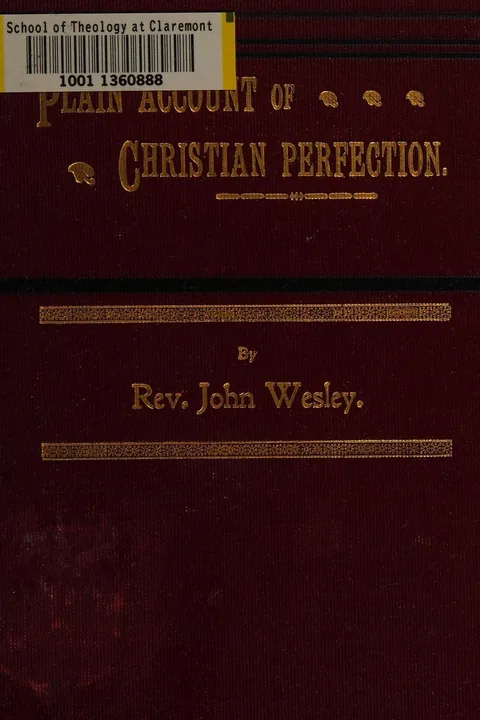
A Plain Account of Christian Perfection
John Wesley — Wesley's account, in its final 1777 form, of how his teaching on Christian perfection developed from 1725 onward, with extracts from his sermons, hymns, conference minutes and answers to objections, followed by his Brief Thoughts on Christian Perfection.A Priest to the Temple, or, The Countrey Parson His Character, and Rule of Holy Life
George Herbert — Herbert's portrait of the country parson in thirty-seven short chapters: his life, knowledge, praying and preaching, his Sundays, household, charity and church, his visiting, catechizing and administering of the sacraments, his dealings with church-wardens, his library and his way of applying remedies to the souls of his parish.A Ribband of Blue and Other Bible Studies
Hudson Taylor — Eight short Bible studies by Hudson Taylor, beginning with the 'ribband of blue' on the borders of Israel's garments in Numbers 15 and continuing with meditations on Psalm 1, Job, the Queen of Sheba, Ruth and the Shepherd's care.
A Short and Easy Method of Prayer
Jeanne Guyon — Madame Guyon's little manual of inward prayer, teaching simple recollected attention to God, abandonment and the prayer of quiet; condemned with other Quietist writings at the end of the seventeenth century, it was widely read by later Protestant pietists and holiness writers.A Treatise against Two Letters of the Pelagians — Book 1
Augustine of Hippo — Augustin replies to a letter sent by Julian, as it was said, to Rome; and first of all vindicates the catholic doctrine from his calumnies; then discovers and confutes the heretical sense of the Pelagians hidden in that profession of faith which the author of the letter opposed to the catholics.A Treatise against Two Letters of the Pelagians — Book 2
Augustine of Hippo — He undertakes to examine the second letter of the Pelagians, filled, like the first, with calumnies against the Catholics-a letter that was sent by them to Thessalonica in the name of eighteen bishops; and, first of all, he shows, by the comparison of the heretical writings with one another, that the Catholics are by no means falling into the errors of the manicheans in detesting the dogmas of the Pelagians. He repelA Treatise against Two Letters of the Pelagians — Book 3
Augustine of Hippo — Augustin goes on to refute other matters which are calumniously objected by the Pelagians in the same letter sent to Thessalonica; and expounds, in opposition to their heresy, what those who are truly Catholic say concerning the utility of the law; what they teach of the effect and virtue of baptism; what of the discrepancy between the two testaments, the old and the new; what concerning the righteousness and perfectA Treatise against Two Letters of the Pelagians — Book 4
Augustine of Hippo — After having set aside in the former books the Calumnies hurled against the Catholics, Augustin here proceeds to open up the snares which lie hidden in the remaining part of the second epistle of the Pelagians, in the five heads of their doctrine-In the praise, to wit, of the creature, the praise of marriage, the praise of the law, the praise of free will, and the praise of the saints; in connection with which heads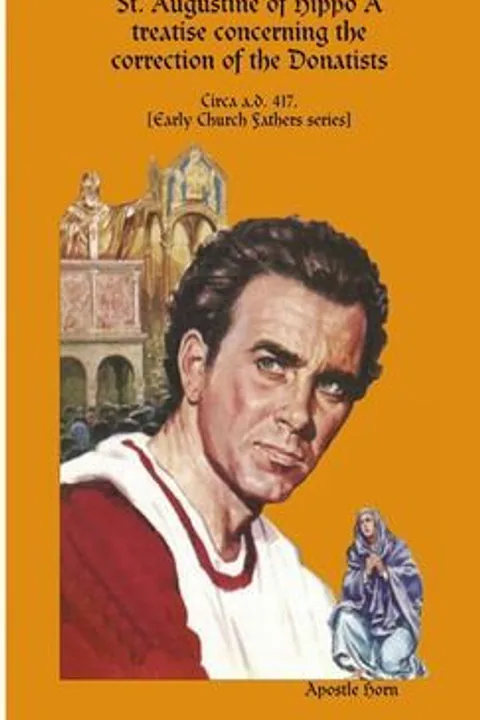
A Treatise concerning the Correction of the Donatists
Augustine of Hippo — A letter of Augustin 2 to Boniface, who, as we learn from Epistle 220, was Tribune, and afterwards Count in Africa. In it Augustin shows that the heresy of the Donatists has nothing in common with that of Arius; and points out the moderation with which it was possible to recall the heretics to the communion of the Church through awe of the imperial laws. He adds remarks concerning the savage conduct of the DonatistsA Treatise of the Covenant of Grace
John Ball — John Ball's posthumous treatise on covenant theology, tracing the covenant of grace from Adam through the patriarchs, Moses and the prophets to Christ, contrasting it with the covenant of works and answering Arminian positions. A key source for the Westminster divines. Seventeenth-century spelling retained.
A Treatise on Faith and the Creed
Augustine of Hippo — The occasion and date of the composition of this treatise are indicated in a statement which Augustin makes in the seventeenth chapter of the First Book of his Retractations .
A Treatise on Good Works
Martin Luther — Luther explains good works through faith and the Ten Commandments, directing attention to ordinary responsibilities toward God and neighbor.
A Treatise on Grace and Free Will
Augustine of Hippo — Augustine examines how God’s grace and human willing belong together. He reads biblical commands and promises to explain why obedience depends on divine help without making human choices meaningless.A Treatise on the Grace of Christ, and on Original Sin — Book 1
Augustine of Hippo — Wherein he shows that Pelagius is disingenuous in his confession of grace, inasmuch as he places grace either in nature and free will, or in law and teaching; and, moreover, asserts that it is merely the "possibility" (as he calls it) of will and action, and not the will and action itself, which is assisted by divine grace; and that this assisting grace, too, is given by God according to men's merits; whilst he furthA Treatise on the Grace of Christ, and on Original Sin — Book 2
Augustine of Hippo — Wherein Augustin shows that Pelagius really differs in no respect, on the question of original sin and the baptism of infants, from his follower Coelestius, who, refusing to acknowledge original sin and even daring to deny the doctrine in public, was condemned in trials before the bishops - first at carthage, and afterwards at rome; for this question is not, as these heretics would have it, one wherein persons mightA Treatise on the Predestination of the Saints — Book 1
Augustine of Hippo — Wherein the truth of predestination and grace is defended against the semi-Pelagians,-those people to wit, who by no means withdraw altogether from the Pelagian heresy, in that they contend that the beginning of salvation and of faith is of ourselves; so that in virtue, as it were, of this precedent merit, the other good gifts of God are attained. Augustin shows that not only the increase, but the very beginning alsoA Treatise on the Predestination of the Saints — Book 2
Augustine of Hippo — In the first part of the book he proves that the perseverance by which a man perseveres in Christ to the end is God's gift; for that it is a mockery to ask of God that which is not believed to be given by God. Moreover, that in the Lord's prayer scarcely anything is asked for but perseverance, according to the exposition of the martyr cyprian, by which exposition the enemies to this grace were convicted before they wAbandonment; or, Absolute Surrender to Divine Providence
Jean-Pierre de Caussade — The treatise on abandonment to divine providence, in three books, on the virtue of abandonment, on finding the divine action in the duties and events of each present moment, and on how God guides and sustains the soul wholly abandoned to him, with Ramière's preface distinguishing true abandonment from the error of the Quietists and an appendix of short pieces and acts of abandonment.Abstract of Principles of 1858
Confessional document — The authors discusses the Holy Spirit, sin, and divine grace in Abstract of Principles of 1858. The opening subject is “God is revealed to us as father, son and Holy spirit each with distinct personal attributes, but without division of nature, essence or being.”Acta Archelai
Hegemonius — Source : Please note that this is the public domain, 19th century translation by S. D. F. Salmond. A new translation by Mark Vermes, based on the improved Beeson critical edition of the text, was published by Brepols (Turnhout, Belgium) in 2001.Acts or Disputation against Fortunatus — Disputation of the Second Day
Augustine of Hippo — The next day, a notary having again been summoned, the discussion was conducted as follows:Address to the Christian Nobility of the German Nation
Martin Luther — Martin Luther discusses the soul, care for the poor, and faith in Address to the Christian Nobility of the German Nation. The opening subject is “to the respected and worthy nicolaus von amsdorff, licentiate in the holy scriptures and canon of wittenberg, my particular and affectionate friend.”
Against Celsus — Book 6
Origen of Alexandria — In beginning this our sixth book, we desire, my reverend Ambrosius, to answer in it those accusations which Celsus brings against the Christians , not, as might be supposed, those objections which he has adduced from writers on philosophy . For he has quoted a considerable number of passages, chiefly from Plato, and has placed alongside of these such declarations of holy Scripture as are fitted to impress even the in
Against Celsus — Book 7
Origen of Alexandria — In the six former books we have endeavoured, reverend brother Ambrosius, according to our ability to meet the charges brought by Celsus against the Christians, and have as far as possible passed over nothing without first subjecting it to a full and close examination. And now, while we enter upon the seventh book, we call upon God through Jesus Christ, whom Celsus accuses, that He who is the truth of God would shed l
Against Celsus — Book 8
Origen of Alexandria — Having completed seven books, I now propose to begin the eighth. And may God and His Only-begotten Son the Word be with us, to enable us effectively to refute the falsehoods which Celsus has published under the delusive title of A True Discourse , and at the same time to unfold the truths of Christianity with such fulness as our purpose requires. And as Paul said, "We are ambassadors for Christ, as though God did besAgainst Diodore of Tarsus and Theodore of Mopsuestia — Fragments of Book 1 against Diodore
Cyril of Alexandria — Surviving excerpts from Cyril of Alexandria’s writings, collected here as Against Diodore of Tarsus and Theodore of Mopsuestia, Fragments of Book 1 Against Diodore. Readers can examine passages preserved apart from their original complete works. The opening subject is “from his treatise against diodore bishop of tarsus 1.” Topics include the soul, truth, and the incarnation.Against Diodore of Tarsus and Theodore of Mopsuestia — Fragments of Book 2 against Theodore
Cyril of Alexandria — Surviving excerpts from Cyril of Alexandria’s writings, collected here as Against Diodore of Tarsus and Theodore of Mopsuestia, Fragments of Book 2 Against Theodore. Readers can examine passages preserved apart from their original complete works. The opening subject is “from his second book against the words of theodore 1.” Topics include divine grace, the incarnation, and suffering.Against Diodore of Tarsus and Theodore of Mopsuestia — Fragments of Book 3 against Theodore
Cyril of Alexandria — Surviving excerpts from Cyril of Alexandria’s writings, collected here as Against Diodore of Tarsus and Theodore of Mopsuestia, Fragments of Book 3 Against Theodore. Readers can examine passages preserved apart from their original complete works. The opening subject is “from the third book against theodore bishop of mopsuestia.” Topics include the incarnation, baptism, and divine grace.Against Eunomius — Book 1
Gregory of Nyssa — Gregory of Nyssa discusses creation, the Holy Spirit, and truth in Against Eunomius, Book 1. The opening subject is “§2. we have been justly provoked to make this answer, being stung by eunamius' accusations of our brother.”Against Eunomius — Book 12
Gregory of Nyssa — Gregory of Nyssa discusses the incarnation, divine grace, and truth in Against Eunomius, Book 12. The opening subject is “§1. this twelfth book gives a notable interpretation of the words of the lord to Mary, "touch me not, for i am not yet ascended to my father.”Against Eunomius — Book 4
Gregory of Nyssa — Gregory of Nyssa discusses creation, idolatry, and truth in Against Eunomius, Book 4. The opening subject is “§3. he then again admirably discussed the term prwtotokoz as it is four times employed apostle.”Against Eunomius — Book 6
Gregory of Nyssa — Gregory of Nyssa discusses suffering, sin, and creation in Against Eunomius, Book 6.
Against Hermogenes
Tertullian — Tertullian discusses creation, the soul, and truth in Against Hermogenes. The opening subject is “hermogenes, after a perverse induction from mere heretical assumptions, concludes that God created all things out of pre-existing matter.”Against Hierocles — English Translation
Eusebius of Caesarea — Eusebius of Caesarea discusses truth, the soul, and prayer in Against Hierocles, English Translation.Against Marcion 1
Ephrem the Syrian — Ephrem the Syrian discusses prayer, divine grace, and the soul in Against Marcion 1. The opening subject is “against marcion i.”Against Marcion 2
Ephrem the Syrian — Ephrem the Syrian discusses baptism, humility, and the law in Against Marcion 2. The opening subject is “against marcion ii.”Against Marcion 3
Ephrem the Syrian — Ephrem the Syrian discusses creation, the soul, and the law in Against Marcion 3. The opening subject is “against marcion iii.”Against Marcionists and Manichaeans
John Chrysostom — John Chrysostom discusses prayer, the incarnation, and the soul in Against Marcionists and Manichaeans. The opening subject is “against marcionists and manichaeans.”Against the Donatists — Appendices 3 16. Letters and rescripts
Optatus of Milevis — Optatus of Milevis discusses judgment, church unity, and the law in Against the Donatists, Appendices 3 16. Letters and rescripts.Against the Donatists — Appendix 2. The Trial before Zenophilus
Optatus of Milevis — Optatus of Milevis discusses care for the poor, the soul, and martyrdom in Against the Donatists, Appendix 2. The trial before Zenophilus. The opening subject is “appendix----ii.”Against the Donatists — Book 3
Optatus of Milevis — Optatus of Milevis discusses church unity, baptism, and care for the poor in Against the Donatists, Book 3. The opening subject is “i. the severities against the donatists were provoked by themselves, and catholics ought not to be blamed for them.”Against the Donatists — Book 5
Optatus of Milevis — Optatus of Milevis discusses baptism, the Trinity, and divine grace in Against the Donatists, Book 5. The opening subject is “i. from parmenian's own principles it follows that baptism is one.”Against the Donatists — Book 6
Optatus of Milevis — Optatus of Milevis discusses church unity, prayer, and virginity in Against the Donatists, Book 6. The opening subject is “i. the wickedness of the donatists in breaking or scraping the altars.”Against the Heathen — Book 2
Arnobius of Sicca — Arnobius of Sicca discusses the soul, knowledge, and suffering in Against the Heathen Book 2.Against the Heathen — Book 3
Arnobius of Sicca — Arnobius of Sicca discusses prayer, truth, and knowledge in Against the Heathen Book 3.Against the Heathen — Book 4
Arnobius of Sicca — Arnobius of Sicca discusses marriage, prayer, and anger in Against the Heathen Book 4.Against the Heathen — Book 5
Arnobius of Sicca — Arnobius of Sicca discusses prayer, anger, and marriage in Against the Heathen Book 5.Against the Heathen — Book 6
Arnobius of Sicca — Arnobius of Sicca discusses prayer, idolatry, and suffering in Against the Heathen Book 6.
Against the Heathen — Part 1
Athanasius of Alexandria — Athanasius challenges idolatry and argues that the order of creation points to the divine Word. He examines how human beings turned from the knowledge of God to the worship of created things.Against the Jews — Homily 1
John Chrysostom — John Chrysostom discusses the soul, fasting, and idolatry in Against the Jews, Homily 1. The opening subject is “holy, holy, holy, the lord God of hosts, all the earth is filled with his glory.”Against the Jews — Homily 2
John Chrysostom — John Chrysostom discusses the law, divine grace, and justification in Against the Jews, Homily 2.Against the Jews — Homily 2 (Missing Portion)
John Chrysostom — John Chrysostom discusses the law, idolatry, and divine grace in Against the Jews, Homily 2 (missing portion). The opening subject is “the page references embedded in the translation are for this publication by pradels et al., where refs. to the ms. pagination can be found.”Against the Jews — Homily 3
John Chrysostom — John Chrysostom discusses prayer, fasting, and sin in Against the Jews, Homily 3. The opening subject is “against those who keep the first paschal fast.”Against the Jews — Homily 6
John Chrysostom — John Chrysostom discusses sin, idolatry, and the law in Against the Jews, Homily 6.Against the Jews — Homily 7
John Chrysostom — John Chrysostom discusses pastoral ministry, the law, and the soul in Against the Jews, Homily 7.Against the Jews — Homily 8
John Chrysostom — John Chrysostom discusses sin, the soul, and martyrdom in Against the Jews, Homily 8.Against the Jews — Preface to the Online Edition
John Chrysostom — Introductory material for Against the Jews by John Chrysostom, providing context for the edition and the work that follows. The opening subject is “homilies 7 and 8 were listed with the note.”Against the Pelagians — Book 1
Jerome — Jerome discusses sin, divine grace, and virtue in Against the Pelagians, Book 1. The opening subject is “critobulus. it is true, atticus; but our rivals do not take the words in the sense i attached to them.”Against the Pelagians — Book 2
Jerome — Jerome discusses sin, divine grace, and justification in Against the Pelagians, Book 2. The opening subject is “in psalm xxxii. 5. one who speaks of himself as "holy," yet confesses his transgression.”Against the Pelagians — Book 3
Jerome — Jerome discusses sin, baptism, and prayer in Against the Pelagians, Book 3. The opening subject is “a. either i fail to express my meaning clearly, or you are slow of apprehension.”Against the Pelagians — Prologue
Jerome — Jerome discusses envy, sin, and divine grace in Against the Pelagians, Prologue. The opening subject is “dialogue between atticus, a catholic, and critobulus, a heretic.”Against the Synousiasts (Fragments)
Cyril of Alexandria — Surviving excerpts from Cyril of Alexandria’s writings, collected here as Against the synousiasts (fragments). Readers can examine passages preserved apart from their original complete works. The opening subject is “from his treatise 1 against the synousiasts 2.” Topics include suffering, the incarnation, and faith.Against the Valentinians
Tertullian — Tertullian discusses the soul, the Holy Spirit, and creation in Against the Valentinians. The opening subject is “these heretics brand the Christians as simple persons. the charge accepted, and simplicity eulogized out of the scriptures.”
All of Grace
Charles Spurgeon — Spurgeon's short evangelistic book for those seeking salvation, explaining that God justifies the ungodly by grace through faith, and treating faith, repentance, regeneration, perseverance and the fear of falling away.American Lutheranism
Friedrich Bente — Friedrich Bente’s historical account of American Lutheran church bodies, their confessional debates, and their institutional development.
American Lutheranism Vindicated
Samuel Simon Schmucker — Samuel Simon Schmucker discusses baptism, the Eucharist, and sin in American Lutheranism Vindicated. The opening subject is “earnestly contend for the faith, once delivered to the saints. Jude 3.”
An Admonition Showing the Advantages Which Christendom Might Derive from an Inventory of Relics
John Calvin — Calvin's 1543 satire and polemic against the cult of relics, cataloguing the duplicated and implausible relics of Christ, Mary, the apostles and saints displayed across Europe and urging that they be inventoried and removed.An Alarme to Unconverted Sinners
Joseph Alleine — Alleine's plain treatise on conversion, with its long address to the ignorant and ungodly: what conversion is not and what it is, its necessity, the marks and miseries of the unconverted, directions for turning to God with a form of covenant and a soliloquy, and motives to conversion.An Apology for the True Christian Divinity
Robert Barclay — The classic systematic defence of Quaker belief: fifteen theses on immediate revelation, Scripture, universal and saving light, justification, perfection, worship, the ministry, baptism and the supper, set out and defended against Reformed and Catholic objections. It rejects the outward sacraments, so it differs from the library's other confessional traditions.An Enquiry into the Obligations of Christians to Use Means for the Conversion of the Heathens
William Carey — Carey's argument that the Great Commission still binds Christians, with a review of missions from the apostles to the Moravians, a country-by-country table of the world's population and religions, an answer to the objections of distance, danger and language, and a closing proposal that a company of serious Christians, ministers and private persons, form a society to send missionaries.An Exact Exposition of the Orthodox Faith — Book 1
John Damascene — John Damascene discusses the Holy Spirit, creation, and the Trinity in An Exact Exposition of the Orthodox Faith, Book 1. The opening subject is “John of damascus.”An Exact Exposition of the Orthodox Faith — Book 2
John Damascene — John Damascene discusses the soul, free will, and anger in An Exact Exposition of the Orthodox Faith, Book 2. The opening subject is “concerning fear.fear is divided into six varieties: viz., shrinking 186 , shame, disgrace, consternation, panic, anxiety 187 .”An Exact Exposition of the Orthodox Faith — Book 3
John Damascene — John Damascene discusses the soul, the incarnation, and the Holy Spirit in An Exact Exposition of the Orthodox Faith, Book 3. The opening subject is “John of damascus.”An Exact Exposition of the Orthodox Faith — Book 4
John Damascene — John Damascene discusses baptism, resurrection, and the law in An Exact Exposition of the Orthodox Faith, Book 4. The opening subject is “John of damascus.”
An Exhortation to Peace and Unity
John Bunyan — John Bunyan discusses church unity, prayer, and baptism in An Exhortation to Peace and Unity. The opening subject is “this etext was produced by david price, email ccx074@coventry.ac.uk, from the "works of the puritan divines (bunyan)", 1845 thomas nelson edition.”An Exhortation to Theodore After His Fall — Letter 1
John Chrysostom — John Chrysostom discusses the soul, repentance, and sin in An Exhortation to Theodore After His Fall, Letter 1.An Exhortation to Theodore After His Fall — Letter 2
John Chrysostom — John Chrysostom discusses marriage, the soul, and prayer in An Exhortation to Theodore After His Fall, Letter 2.
An Explanation of Luther's Small Catechism
Joseph Stump — A guide to Christian instruction organized around Luther’s catechism: the commandments, Creed, Lord’s Prayer, Baptism, confession, and the Lord’s Supper.An Exposition of the Chapters of the Acts of the Apostles
Pamphilus of Caesarea — Pamphilus of Caesarea discusses baptism, the Holy Spirit, and prayer in An Exposition of the Chapters of the Acts of the Apostles. The opening subject is “an exposition of the chapters of the Acts of the apostles. 1.”
Apocriticus — English Translation
Macarius Magnes — Macarius Magnes discusses the law, creation, and judgment in Apocriticus, English Translation. The opening subject is “translations of Christian literature. series 1. greek texts.”