
Bishop · Preacher
John Chrysostom
- Born
- c. 347Antioch, Roman Syria
- Died
- 14 September 407Comana Pontica
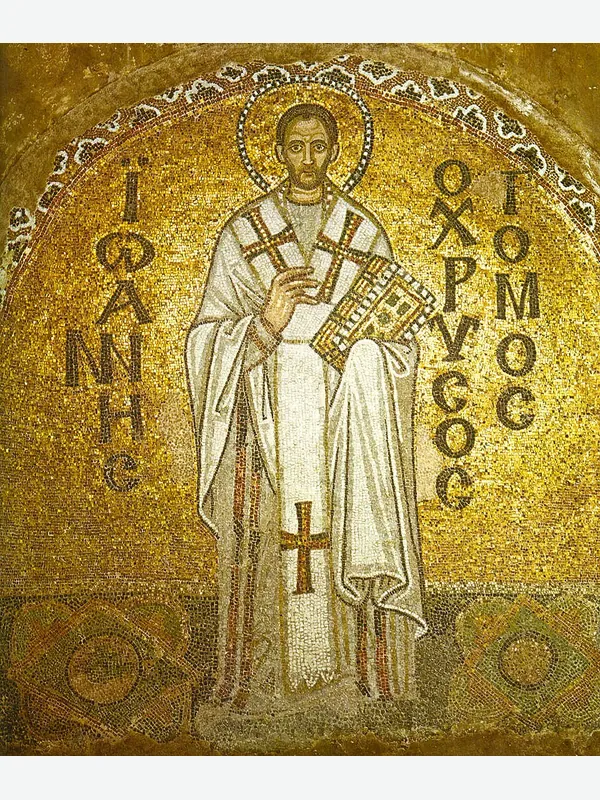
John Chrysostom was a Greek-speaking preacher, biblical interpreter, and bishop formed in late-antique Antioch. Ordained a priest in 386, he became known for sustained homiletic exposition and direct preaching on wealth, poverty, family life, and clerical responsibility. He was made bishop of Constantinople in 398, deposed amid ecclesiastical and imperial conflict, and died in exile in 407.
Start here
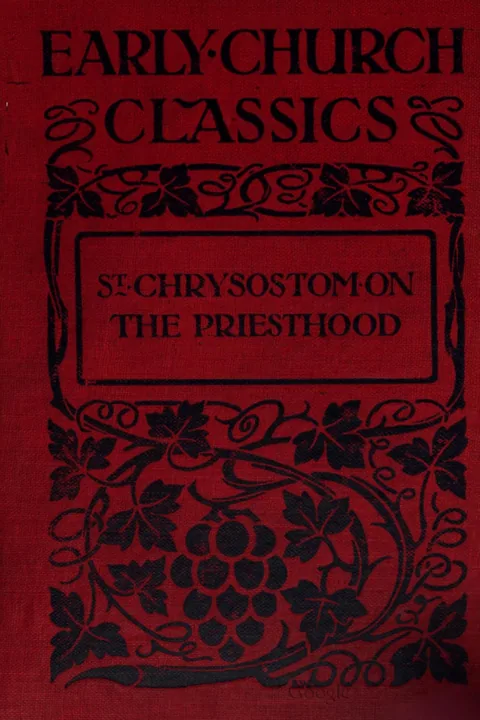 Treatise on the Priesthood — Book 1John ChrysostomTreatise on the Priesthood — Book 1c. 390
- HHHomilies — On Matthew — Homily 1John ChrysostomNicene & Post-NiceneHomilies — On Matthew — Homily 1c. 390
- HHHomilies — Concerning the Statues — Homily 1John ChrysostomNicene & Post-NiceneHomilies — Concerning the Statues — Homily 1c. 390
- LLLetters to Olympias — 1 To My LadyJohn ChrysostomNicene & Post-NiceneLetters to Olympias — 1 To My Ladyc. 390
Biography
Late-antique bishop and preacher whose extensive Greek homilies preserve a major body of Antiochene biblical interpretation and pastoral teaching.
Antiochene formation
John was born at Antioch around the middle of the fourth century and raised by his widowed mother, Anthusa. He received the rhetorical education expected of an ambitious urban elite and studied under the celebrated teacher Libanius. Christian formation under Meletius of Antioch and theological study associated with Diodore of Tarsus redirected those skills toward the church. John spent several years in ascetic life outside the city. Severe practices damaged his health, and he returned to Antioch, where he was ordained deacon in 381 and priest in 386. [1][2]
Preacher at Antioch
As a priest, John preached through biblical books in extended series. His homilies on Genesis, Matthew, John, Acts, and Paul's letters combine attention to the sequence of the text with moral instruction addressed to an urban congregation. During the unrest over imperial statues in 387, he preached sermons that interpreted the crisis and urged repentance while Bishop Flavian appealed to the emperor. John's sermons also attacked luxury and indifference to the poor. Some employed harsh polemic against Jews, Judaizing Christians, heretics, and rivals, language that requires direct historical and ethical scrutiny rather than devotional softening. [1][2]
Constantinople, deposition, and exile
John was brought to Constantinople and consecrated bishop in 398. He tried to reform clerical life, household expenditure, and the conduct of influential Christians. His interventions won support among some clergy and laypeople but provoked resistance at court and among bishops. Theophilus of Alexandria presided over the Synod of the Oak, which deposed John in 403. He was briefly recalled, then exiled again in 404. From exile he maintained an active correspondence, including letters to the deaconess Olympias and appeals to western bishops. He died in 407 while being moved farther from Constantinople. [1][2]
Works and bibliography
551 works in TrinityLibrary
A Treatise to Prove That No One Can Harm the Man Who Does Not Injure Himself
John Chrysostom discusses care for the poor, the soul, and suffering in A Treatise to Prove that No One Can Harm the Man Who Does Not Injure Himself.Against Marcionists and Manichaeans
John Chrysostom discusses prayer, the incarnation, and the soul in Against Marcionists and Manichaeans. The opening subject is “against marcionists and manichaeans.”Against the Jews — Homily 1
John Chrysostom discusses the soul, fasting, and idolatry in Against the Jews, Homily 1. The opening subject is “holy, holy, holy, the lord God of hosts, all the earth is filled with his glory.”Against the Jews — Homily 2
John Chrysostom discusses the law, divine grace, and justification in Against the Jews, Homily 2.Against the Jews — Homily 2 (Missing Portion)
John Chrysostom discusses the law, idolatry, and divine grace in Against the Jews, Homily 2 (missing portion). The opening subject is “the page references embedded in the translation are for this publication by pradels et al., where refs. to the ms. pagination can be found.”Against the Jews — Homily 3
John Chrysostom discusses prayer, fasting, and sin in Against the Jews, Homily 3. The opening subject is “against those who keep the first paschal fast.”Against the Jews — Homily 4
John Chrysostom discusses the law, fasting, and patience in Against the Jews, Homily 4. The opening subject is “against the jews and the trumpets of their pasch.”Against the Jews — Homily 5
John Chrysostom discusses the law, prayer, and sin in Against the Jews, Homily 5. The opening subject is “this makes me the more eager to hold fast to my topic and, from the fullness of my heart, to keep the promises i have made.”Against the Jews — Homily 6
John Chrysostom discusses sin, idolatry, and the law in Against the Jews, Homily 6.Against the Jews — Homily 7
John Chrysostom discusses pastoral ministry, the law, and the soul in Against the Jews, Homily 7.Other historically significant writings
- On the Priesthoodfourth century · Greek · Pastoral dialogue · accepted
- Letters to Olympiasduring exile, 404–407 · Greek · Letters · accepted
Theology & thought
Scripture in preaching
Chrysostom usually follows the literary sequence and practical sense of a passage, explaining vocabulary, argument, character, and circumstance before pressing its demands on his hearers. His exegesis belongs to the Antiochene tradition but cannot be reduced to a modern literalist method.
Primary texts:Homilies — On John — Homily 1Homilies — On Matthew — Homily 1Homilies — On Romans — Homily 1
Wealth, almsgiving, and the poor
His preaching repeatedly treats wealth as a stewardship tested by the needs of the poor. Almsgiving belongs to repentance and Christian worship, and neglect of a suffering neighbor exposes the emptiness of outward religious display.
Primary texts:Four Discourses, Chiefly on the Parable of the Rich Man and Lazarus — Discourse 1Homilies — On Matthew — Homily 1
Priesthood and pastoral responsibility
On the Priesthood presents ministry as an exacting responsibility for teaching, worship, discipline, and the care of souls. Its elevated rhetoric should be read alongside Chrysostom's own demanding and sometimes contested exercise of episcopal authority.
Primary texts:Treatise on the Priesthood
Religious polemic and its harm
Several sermons against Jews and Judaizing Christians use abusive stereotypes and sweeping accusations. They arose within late-antique competition over religious practice, but that context does not remove their capacity to foster contempt. Modern readers and editors must name the rhetoric plainly and trace its later misuse.
Primary texts:Against the Jews — Homily 1
Historical timeline
Approximate and disputed dates are marked rather than silently normalized.
- life
Born at Antioch
Born into a Greek-speaking Christian household in Roman Syria; the exact year remains uncertain. [1]
- office
Ordained priest
Began the principal preaching period that produced many surviving homily series. [1]
- controversy
Deposed at the Synod of the Oak
Removed after a conflict involving Theophilus of Alexandria, other bishops, and the imperial court. [1]
Relationships & influence
The pagan rhetorician Libanius trained John in the techniques of classical public speech that later marked his preaching.
Documented personal relationshipDiodore's Antiochene circle contributed to John's theological and exegetical formation.
Documented personal relationshipOlympias supported John's ministry, and his letters to her from exile form an important record of pastoral friendship and suffering.
Documented personal relationshipTheophilus presided over the proceedings that deposed John amid wider jurisdictional, personal, and imperial conflict.
Documented personal relationshipLiturgical and theological reception
Eastern Orthodox churches honor Chrysostom among the Three Holy Hierarchs, and Byzantine tradition attached his name to its most widely used form of the Divine Liturgy, though the exact extent of his authorship is debated. Roman Catholic, Anglican, and Protestant readers have also drawn extensively on his biblical homilies. His anti-Jewish rhetoric now demands sustained critical attention alongside that broad reception. [1]
Sources & further reading
Reader-facing prose and editorial evidence are kept distinct. Source status reflects link and identity checks, not endorsement of every claim in a source.
- scholarshipChrysostom, John, c. 354–407 CEverified
Oxford Classical Dictionary · 2015
- referenceChrysostomverified
Encyclopaedia Britannica, 11th edition · 1911
- primaryHomilies Concerning the Statuesverified
John Chrysostom
- primaryLetters to Olympiasverified
John Chrysostom