← Authors

Bishop · Theologian

Irenaeus of Lyons

Born
c. 130–140Asia Minor, probably near Smyrna
Died
c. 200

Irenaeus was a Greek-speaking Christian from Asia Minor who became a presbyter and then bishop at Lyons in Roman Gaul. He remembered hearing Polycarp in his youth and later wrote Against Heresies, a five-book description and refutation of rival teachings. His theology stresses the unity of creation and redemption, the public apostolic faith, and Christ's recapitulation of human life.

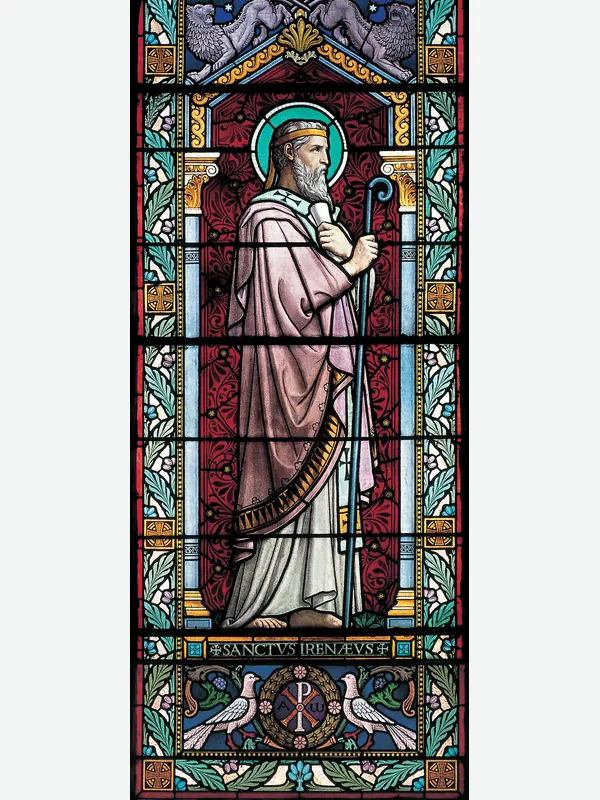
Historical artistic depiction of Irenaeus
Historical depiction · not a verified likeness

Start here

Second century · Ante-NiceneHistorical period
Bishop · Theologian · HeresiologistPrincipal roles
GreekWriting languages
10Works available here

Biography

Second-century bishop and theologian whose defense of the rule of faith linked Scripture, apostolic teaching, creation, incarnation, and resurrection against rival Gnostic systems.

Origins in Asia Minor

Irenaeus was born in the first half of the second century, probably in the Greek-speaking world of Asia Minor. In a letter preserved by Eusebius, he recalled listening to Polycarp of Smyrna as a young person and remembered Polycarp's accounts of earlier Christian witnesses. The memory gives a valuable link to the churches of Asia Minor, though later claims that make Irenaeus a formal disciple of an apostle go beyond the evidence. His surviving writings show wide familiarity with Greek Christian texts, scriptural interpretation, and the competing schools he later opposed. [1][2]

Presbyter and bishop at Lyons

By 177 Irenaeus was serving as a presbyter in Lyons, a commercial city in Roman Gaul with ties to the eastern Mediterranean. During a persecution that killed Bishop Pothinus and other Christians, the local confessors sent Irenaeus to Rome with a letter concerning the Montanist controversy. Because he was away, he survived the violence. On his return he succeeded Pothinus as bishop. Most details of his episcopate are lost, but Eusebius preserves evidence that Irenaeus later urged Bishop Victor of Rome not to break communion with Asian churches over the date of Easter. [1][2]

Against Heresies

Irenaeus wrote the work commonly called Against Heresies around the 180s. Its fuller title announces the detection and overthrow of knowledge falsely so called. The first books describe several schools, especially Valentinian systems, before the later books construct an argument from Scripture, the church's public rule of faith, and the continuity of apostolic teaching. His reports are polemical and cannot be treated as neutral ethnography, yet they remain major evidence for second-century Christian diversity. The Greek original survives only in fragments; the complete work is preserved chiefly in an early Latin translation. [1][2][3]

Later work and uncertain death

The Demonstration of the Apostolic Preaching offers a more compact exposition of the faith through the narrative of Scripture. Other writings survive only in quotations or fragments. The record of Irenaeus fades near the end of the second century. Later tradition remembered him as a martyr, but early sources do not establish the manner of his death. That uncertainty matters because his historical importance does not depend on a reconstructed martyr story. His surviving books already show a bishop working to define Christian identity through creation, Scripture, apostolic proclamation, Eucharistic life, and hope for bodily resurrection. [1][2][3]

Works and bibliography

10 works in TrinityLibrary

Other historically significant writings

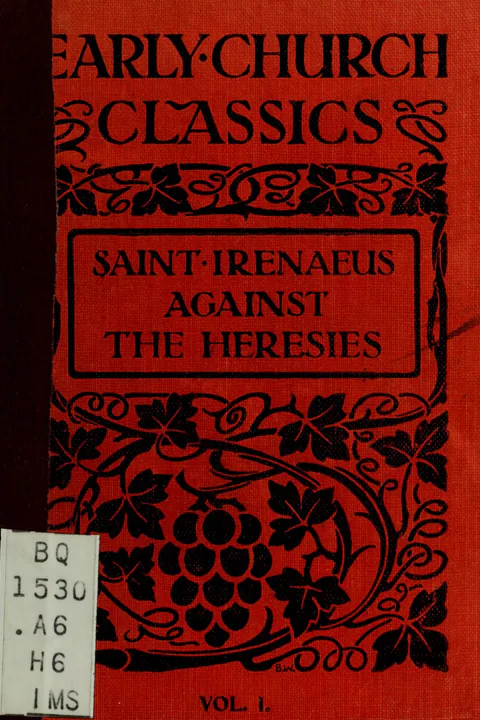
  • Irenaeus Against Heresiesc. 180s · Greek · Doctrinal controversy · accepted

    Complete chiefly in an ancient Latin translation; Greek fragments survive.

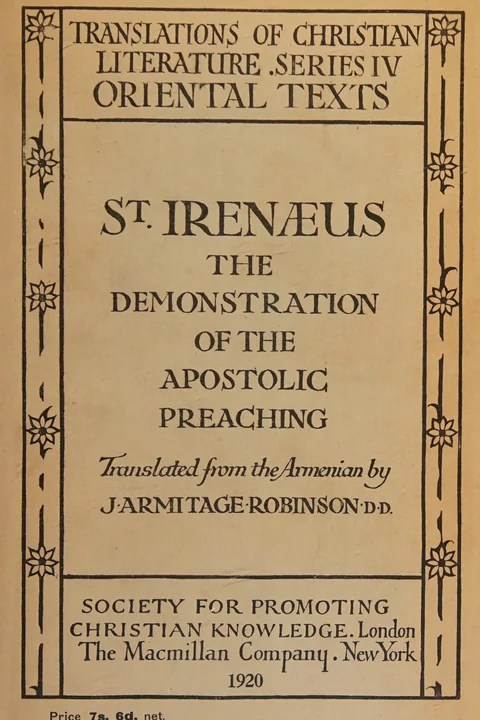
  • The Proof of the Apostolic Preachinglate second century · Greek · Catechetical exposition · accepted

    The complete text survives in Armenian translation.

  • On the Ogdoadsecond century · Greek · Doctrinal treatise · accepted

    Survives only in fragments and ancient references.

Theology & thought

One God, one creation, one economy

Against teachings that separated a lesser creator from the Father of Christ, Irenaeus argues that the one God made the material world and brings that same creation to fulfillment. Creation and redemption are parts of one divine economy rather than the work of rival deities.

Primary texts:Irenaeus against Heresies

Christ recapitulates human life

The incarnate Word takes up the human story and brings it toward its intended end. Irenaeus sets Christ's obedience against Adam's disobedience and draws a corresponding contrast between Mary and Eve, placing salvation within the renewal of embodied history.

Primary texts:Irenaeus against Heresies

The body, Eucharist, and resurrection

Because creation is God's work and the Word truly became flesh, bodily life is capable of salvation. Irenaeus appeals to the Eucharist and Christ's resurrection against claims that the flesh must be discarded rather than raised and transformed.

Primary texts:Irenaeus against Heresies

Historical timeline

Approximate and disputed dates are marked rather than silently normalized.

  1. life

    Born in Asia Minor

    Probably born in or near the Christian communities around Smyrna; the year and place are uncertain. [1]

  2. education

    Hears Polycarp

    Later recalled hearing Polycarp teach and speak about earlier Christian witnesses. [1]

  3. life

    Mission to Rome during the Lyons persecution

    Served as a presbyter and carried a letter to Rome while members of the church at Lyons suffered persecution. [1]

  4. office

    Bishop of Lyons

    Succeeded Pothinus as leader of the church after the persecution. [1]

  5. publication

    Writes Against Heresies

    Produced his five-book account and refutation of teachings he judged contrary to the apostolic faith. [1]

    Read Irenaeus against Heresies — Book 1
  6. life

    End of the historical record

    The exact date, place, and manner of his death are not securely known. [1]

Relationships & influence

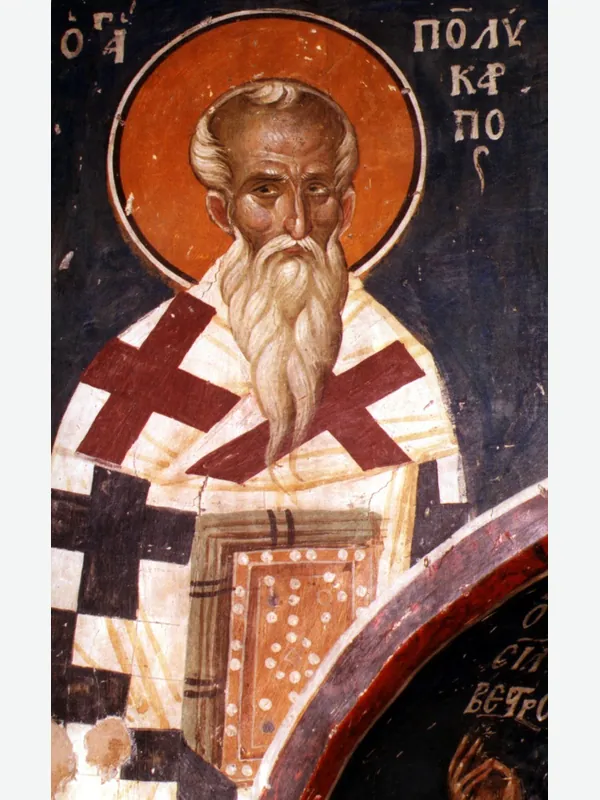
Historical artistic depiction of Polycarp of Smyrna
polycarp of smyrnateacher

Irenaeus explicitly remembered hearing Polycarp in his youth, though the evidence does not define the relationship as a formal apprenticeship.

Documented personal relationship
pothinus of lyonssuccessorComing soon

Irenaeus served as a presbyter under Pothinus and succeeded him after the bishop's death in the persecution of 177.

Documented personal relationship
victor icorrespondentComing soon

Irenaeus wrote to Victor of Rome urging peace when disagreement over the date of Easter threatened communion with Asian churches.

Documented personal relationship
valentinusopponentComing soon

Against Heresies contests Valentinian systems and their interpreters; Valentinus belonged to an earlier generation, so no meeting is implied.

Later or textual influence — no personal contact implied

Reception across Christian traditions

Greek and Latin churches received Irenaeus as a major witness to second-century doctrine, though much of his Greek text was lost. Roman Catholic and Orthodox writers have emphasized his account of apostolic tradition, while Protestant scholars have often engaged his scriptural argument and doctrine of recapitulation. Modern historians also read him critically as a polemical classifier of groups he opposed. In 2022 the Roman Catholic Church declared him a Doctor of the Church with the title Doctor of Unity. [1]

Sources & further reading

Reader-facing prose and editorial evidence are kept distinct. Source status reflects link and identity checks, not endorsement of every claim in a source.

  1. scholarship
    Irenaeus of Lyons: Identifying Christianity

    John Behr · Oxford University Press · 2013

    verified
  2. reference
    Irenaeus

    Encyclopaedia Britannica, 11th edition · 1911

    verified
  3. primary
    Against Heresies

    Irenaeus of Lyons

    verified
  4. primaryverified