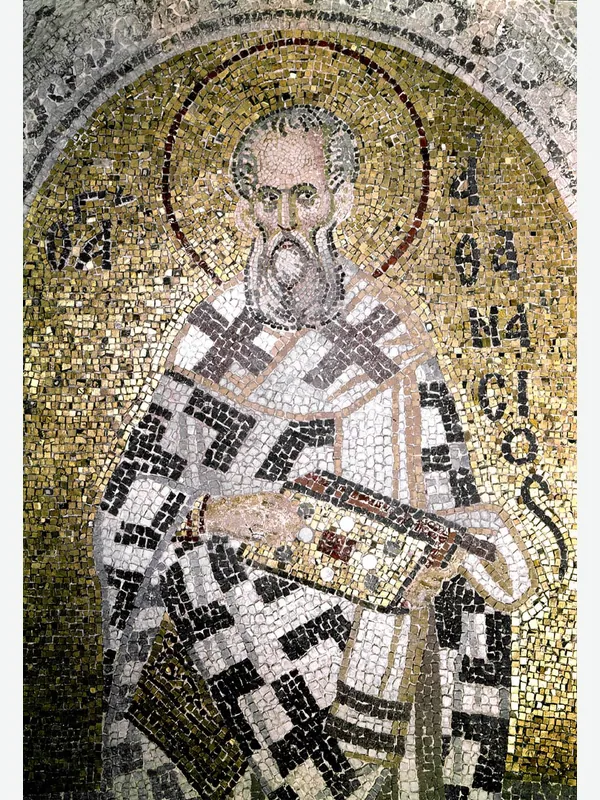
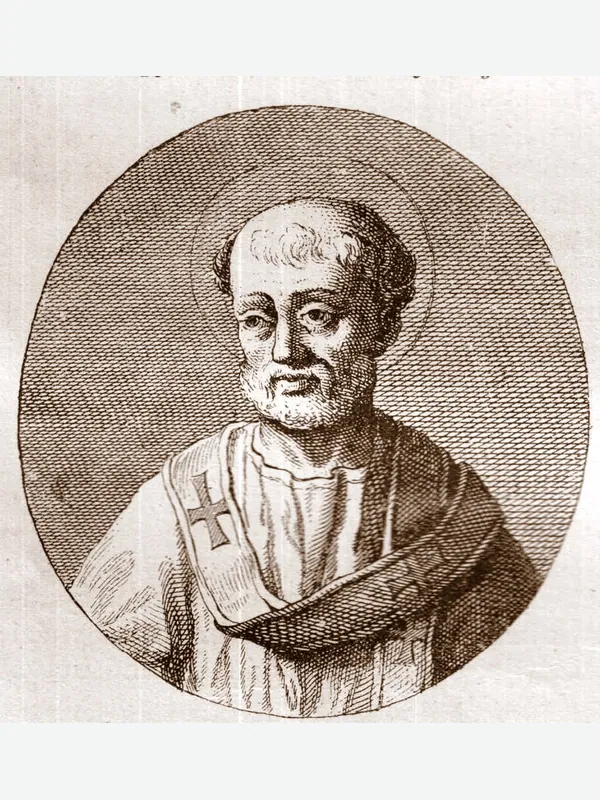
Athanasius of Alexandria was a deacon at the Council of Nicaea and bishop of Alexandria from 328 to 373. Repeatedly exiled amid imperial and ecclesiastical conflicts, he defended the Nicene confession that the Son is fully divine and wrote influential works on creation, incarnation, the Arian controversies, the Holy Spirit, and Egyptian monasticism.
Late antiquity · Patristic · Nicene controversyHistorical period
Bishop · Theologian · PolemicistPrincipal roles
Greek · Coptic contextWriting languages
80Works available here
Biography
Fourth-century Alexandrian bishop, theologian, and polemicist whose defense of Nicene teaching helped shape later Christian confession of the Son and Holy Spirit.
Alexandrian formation and Nicaea
Athanasius was formed in the scriptural and theological culture of Alexandria and served as deacon and secretary to Bishop Alexander. As a young cleric he attended the Council of Nicaea in 325, where the controversy associated with Arius and the confession that the Son is of one substance with the Father occupied the assembled bishops. Athanasius was not the council's presiding theologian, but his later career became inseparable from the defense and interpretation of its creed. Early works traditionally placed before or near the beginning of the controversy, Against the Nations and On the Incarnation, present creation and salvation as a unified divine economy centered on the Word. [1][2]
Episcopate, conflict, and exile
Athanasius succeeded Alexander as bishop in 328. His long episcopate unfolded amid disputes over Arius, the Melitian schism, imperial intervention, contested councils, and allegations against his administration. He experienced several periods of deposition or exile under different emperors and spent time in the West and among Egyptian monks. The documentary record is partisan and complex; later slogans about Athanasius standing alone compress a shifting network of allies, opponents, bishops, emperors, and local conflicts. His apologetic and historical writings preserve essential evidence but must be read as interventions by a participant rather than neutral chronicles. [1][2]
Nicene theology and later years
Athanasius argued that salvation requires the true divinity of the incarnate Word: creatures cannot bestow the divine life and incorruption that humanity receives in Christ. His Orations against the Arians and defense of the Nicene definition developed this case through close, often polemical readings of Scripture. Letters to Serapion extended the argument to the Holy Spirit. In the 360s Athanasius also participated in efforts to distinguish terminological disagreement from substantive denial of Nicene faith. His Life of Antony became a major vehicle for the reception of Egyptian asceticism. After a final brief exile he spent his last years in Alexandria and died in 373. [1][2]
Athanasius challenges idolatry and argues that the order of creation points to the divine Word. He examines how human beings turned from the knowledge of God to the worship of created things.
Athanasius challenges idolatry and argues that the order of creation points to the divine Word. He examines how human beings turned from the knowledge of God to the worship of created things.
Athanasius challenges idolatry and argues that the order of creation points to the divine Word. He examines how human beings turned from the knowledge of God to the worship of created things.
Read the decisions and related documents of the Council of Nicaea, with its teaching and directions for church life. The opening subject is “letter of eusebius of coesarea to the people of his diocese 1 .”
Read the decisions and related documents of the Councils of Ariminum and Seleucia, with its teaching and directions for church life. The opening subject is “part i. history of the councils.”
Athanasius of Alexandria discusses creation, truth, and divine grace in De Decretis or Defence of the Nicene Definition. The opening subject is “conduct of the arians towards the nicene council.”
Athanasius of Alexandria discusses prayer, judgment, and suffering in Defence Against the Arians, Part 1. The opening subject is “part i.-introduction.”
Athanasius of Alexandria discusses truth, judgment, and suffering in Defence Against the Arians, Part 2. The opening subject is “documents connected with the charges of the meletians against s. athanasius.”
Letters to Serapion on the Holy Spiritc. 359–361 · Greek · Theological letters · accepted
Theology & thought
Creation, incarnation, and salvation
Athanasius presents the incarnation of the divine Word as God's restorative answer to humanity's corruption and mortality. The Word who created humanity assumes human nature so that the divine image may be renewed and death defeated.
Against accounts that placed the Son among created beings, Athanasius insisted that the Son belongs eternally to the Father's own being. The Nicene term homoousios served to safeguard the scriptural confession that the Son truly reveals and saves as God.
Fourth-century positions were diverse; the label 'Arian' can obscure differences among Athanasius's opponents and should be used with care.
In the Letters to Serapion Athanasius argued that the Spirit cannot be a creature because the Spirit sanctifies and incorporates believers into divine life. His reasoning contributed to the pro-Nicene theology received at Constantinople in 381.
Primary texts:Letters to Serapion
Historical timeline
Approximate and disputed dates are marked rather than silently normalized.
council
Council of Nicaea
Attended as a deacon in the entourage of Alexander of Alexandria. [1]
office
Became bishop of Alexandria
Succeeded Alexander and began a forty-five-year episcopate interrupted by repeated exiles. [1]
controversy
First exile
Deposed after the Council of Tyre and sent to Trier. [1]
publication
Thirty-ninth Festal Letter
Listed the twenty-seven books of the New Testament in the order now widely received. [1]
Athanasius served Alexander as deacon and secretary and succeeded him as bishop of Alexandria.
Documented personal relationship
A
ariusopponentComing soon
Arius and the controversy around his teaching formed the initial setting for Athanasius's defense of the Son's full divinity.
Documented personal relationship
AE
anthony of egyptbiographerComing soon
Athanasius portrayed Antony as an exemplary ascetic in the influential Life of Antony; the precise history of their contact is reconstructed from partisan ancient evidence.
Documented personal relationship
Reception and historical significance
Athanasius is honored across Eastern Orthodox, Oriental Orthodox, Roman Catholic, Anglican, and many Protestant traditions as a major defender of Nicene faith. Modern historians place his theology within the broader fourth-century pro-Nicene development and examine his ecclesiastical politics with greater attention to contested evidence. The creed commonly called Athanasian is not regarded by modern scholarship as his work. [1][2]
Sources & further reading
Reader-facing prose and editorial evidence are kept distinct. Source status reflects link and identity checks, not endorsement of every claim in a source.